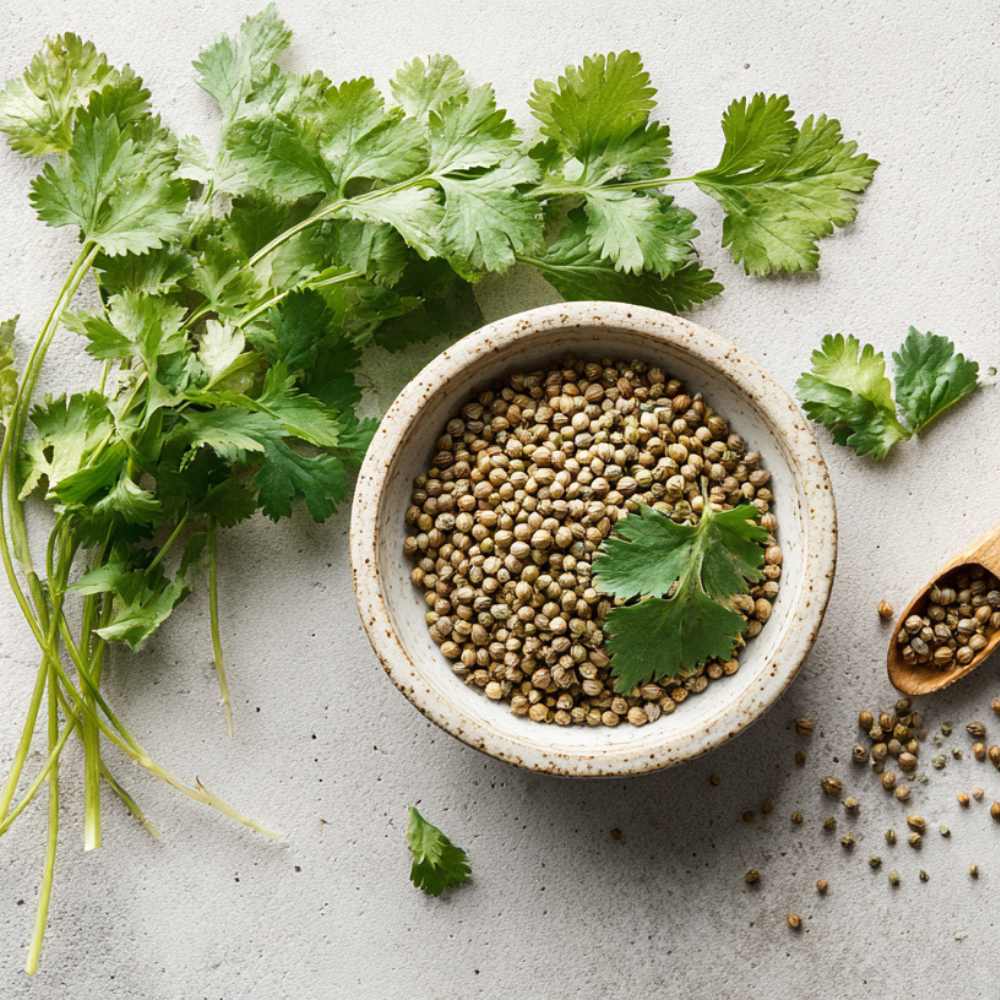
Coriander is a spice with an aromatic, citrus-like scent and a distinctive flavor. The leaves and seeds are the parts of this plant most often used as spices. Is coriander healthy? Coriander is both tasty and healthy. Let’s first talk about the seeds. Coriander seed is small, round and is often sold whole. They are green when fresh, but turn brown as they age. The seeds have a mild, sweet aroma and taste similar to citrus fruits. They are often used whole or ground to a powder for use in curries, meat dishes, rice dishes and bread. Coriander seed is used in traditional Indian, Mexican and Thai cuisine. In North America, coriander is used more in baking than in savory dishes because of its sweet flavor.
You can buy ground coriander seed or use whole seeds to grind yourself before using them in a recipe. Ground coriander has a stronger flavor than whole seeds because the oils that give off their aroma are released when you grind the seeds into smaller pieces. You can add ground coriander to soups, stews and curries. Coriander seed is added to pickles, broths, sauces and marinades for meat dishes, especially pork, poultry and seafood. Can you replace coriander seed with something else? Is coriander healthy? Why do some people find coriander tastes soapy? What is the difference between coriander and parsley? We’ll cover that in this article!
Replacing coriander seed: the best substitutes
The flavor of coriander seed is warm, spicy and similar to citrus. When the seeds are crushed, they release essential oils called linalool and pinene. These oils create unique flavors for your dish. Are there substitutes for coriander? You can replace coriander seed with alternative spices. Here are several herbs that resemble the taste of coriander:
- Cumin
Cumin is a common spice that can be used instead of coriander. It has a very similar flavor, but it also has a slightly bitter aftertaste. Cumin can be used in various ways, but the most common use is to season meat and fish. It is also an ingredient in spice blends such as garam masala and curry powder. - Garam Masala
Garam masala is another common Indian spice blend that can be used as a coriander alternative. Garam masala contains other ingredients such as turmeric, cloves, bay leaf, cinnamon and cumin. Garam masala is often used in North Indian cuisine, so if you’re looking for something that reminds you of your favorite Indian dish, this is the right choice. - Caraway
You can replace coriander seed with caraway seed if you are looking for a coriander alternative with a similar flavor. However, note that caraway’s flavor profile is not as strong as that of coriander. Caraway seed gives your food a bit of earthiness while also adding some sweetness to your dish.
The coriander soapy taste
The taste of coriander is quite strong and unique. Some people find that coriander tastes soapy. How does that happen? Several studies have been done to find out why this is. People who really found coriander tasted like soap had some similarities in various odor receptors. There is a gene called OR6A2 that may play a role in this. This gene causes some olfactory receptors to react strongly to the soapy aldehydes. These people experience the coriander soapy taste. Do you feel that too? You can always use a coriander alternative. Don’t worry!
The difference between coriander and parsley
Are you wondering what the difference between coriander and parsley is? Some people may not be able to distinguish between coriander leaves and parsley. Coriander leaves are known as cilantro. At first glance, coriander and parsley look similar. But if you examine their leaves, you will discover the differences. Coriander has rounded leaves. In addition, parsley has pointed leaves.
You can distinguish the difference between coriander and parsley by smelling their aroma. Parsley has a fresh herbal scent. Coriander has a stronger, citrusy and spicy aroma. Some people describe the taste and smell of fresh coriander leaves as the coriander soapy taste. This is because coriander contains an aldehyde compound that is often found in soap.
Health benefits of coriander
Like other herbs and spices, coriander is not only beneficial for flavoring your dish, but this herb also offers several health benefits. Coriander is one of those herbs that has long been used in traditional medicine. In fact, it has been used for more than 5,000 years. The ancient Egyptians used coriander as a source of food and medicine. Is coriander healthy? The answer is yes!
The first health benefit is lowering your blood sugar. Studies show that coriander can lower blood sugar by as much as 50% when taken with meals that contain carbohydrates and fats. It can also lower your cholesterol. Coriander contains phytosterols that can reduce cholesterol levels by up to 30%. Phytosterols work by blocking the absorption of cholesterol from the digestive tract into the bloodstream.
Coriander can act as a diuretic to help prevent kidney stones. In addition, coriander has been studied for antioxidant properties that may protect against cancer. It has also been shown to reduce inflammation and promote healthy digestion. Given the benefits of coriander, you might want to add a splash of coriander to your dish. It not only improves flavor and aroma but may also offer health benefits.
Frequently asked questions about coriander
1. What is the difference between coriander leaf and coriander seed?
Coriander leaf (fresh coriander) has a fresh, citrusy flavor and is often used raw in Asian, Mexican and Middle Eastern dishes. Coriander seed has a warmer, nutty and slightly sweet flavor and is usually ground or crushed in spice mixes, curries and marinades.
2. Why do some people find coriander tastes soapy?
For some people, coriander tastes soapy due to a genetic variation in smell and taste receptors. This causes certain aroma compounds (aldehydes) to be perceived more strongly. This is completely normal and explains why coriander is such a pronounced “love it or hate it” herb.
3. What do you use coriander for in the kitchen?
Coriander works well in curries, salsas, guacamole, noodle dishes, stews, soups and marinades. Coriander seed is widely used in Indian spice blends, ras el hanout and Mexican spice mixes.
4. Is coriander healthy?
Coriander contains antioxidants and is traditionally used to support digestion. In addition, it adds a lot of flavor to dishes, so you often need less salt — ideal if you want to cook more consciously.
5. How do you best store fresh coriander?
Store fresh coriander in the refrigerator, wrapped in slightly damp kitchen paper or upright in a glass of water (like flowers), covered with a loose plastic bag. This keeps it fresh for a few days longer. Coriander seed can be stored dry, dark and airtight.