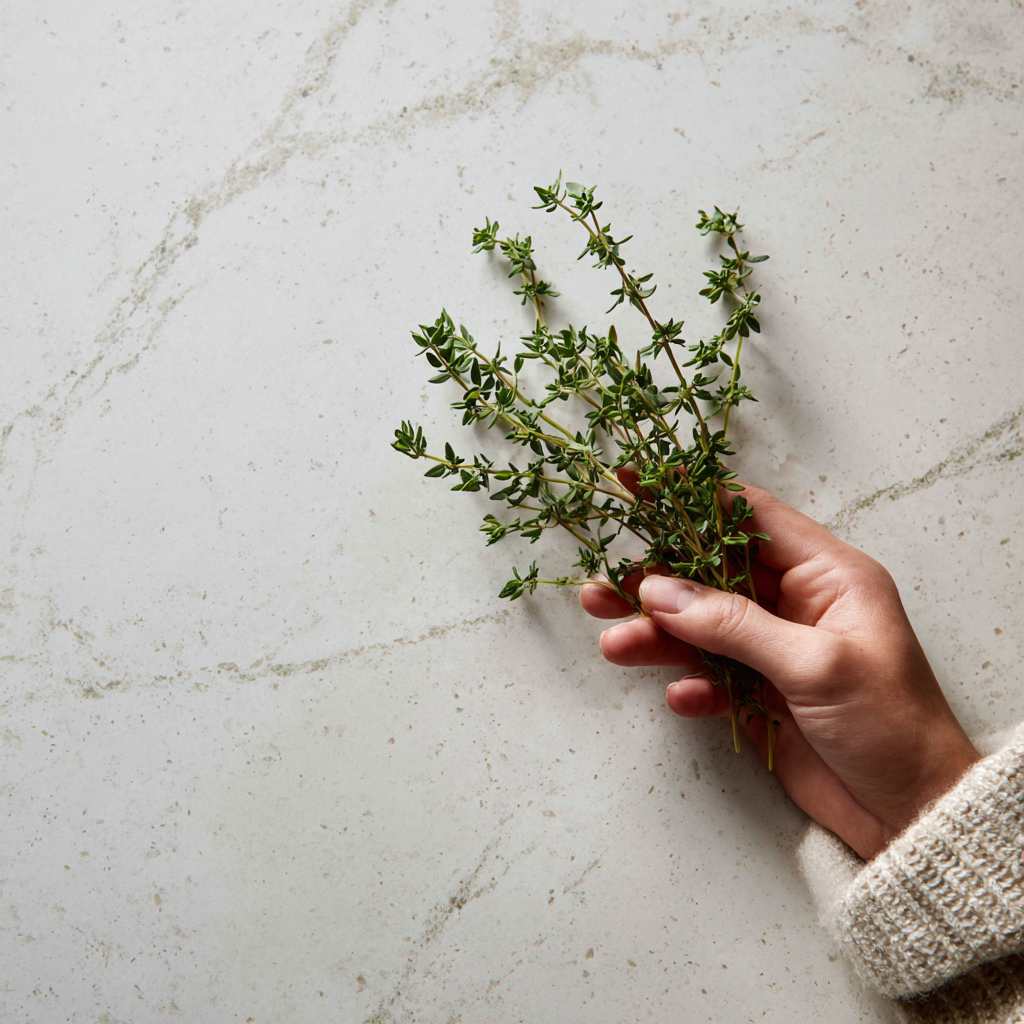
Thyme is one of those herbs that belongs in almost every kitchen. Small in leaf, but big in flavor. Whether you're making a stew, roasting vegetables or simply seasoning a potato dish — thyme immediately adds that familiar, warm herbal note.
In this blog you will read everything about the taste of thyme, how to use it, the difference with rosemary and when to choose fresh or dried thyme.
What does thyme taste like?
Thyme has a warm, earthy and slightly peppery taste with subtle bitter notes. The aroma is herbal and slightly woody, without overpowering.
What makes thyme special:
- Deep, savory flavor (umami-like effect)
- Slightly spicy and aromatic
- Goes well with both meat and vegetables
It is an herb that enhances flavors without becoming too dominant itself.
What do you use thyme for?
Thyme is extremely versatile and fits both simple and elaborate dishes.
Popular uses:
- Stews (beef, chicken, vegetarian)
- Potato dishes (oven or pan)
- Roasted vegetables (carrot, pumpkin, zucchini)
- Soups and sauces
- Marinades for meat or fish
Tip: add thyme early in the cooking process. This gives the herb time to fully release its flavor.
Thyme vs rosemary: what's the difference?
Although thyme and rosemary are often used together, they differ clearly in taste and application.
Thyme:
- Finer and more subtle in flavor
- Lightly spicy and earthy tones
- Suitable for many dishes (all-round)
Rosemary:
- Stronger and more pronounced
- Resinous, almost pine-like aroma
- Goes well with hearty dishes (lamb, potatoes)
In short:
Thyme is more versatile and milder
Rosemary is stronger and more dominant
Together they form a classic combination in Mediterranean cuisine.
Dried vs fresh thyme
A frequently asked question: do you choose fresh or dried thyme?
Dried thyme:
- Stronger, concentrated flavor
- Ideal for stews and long cooking processes
- Long shelf life and easy to dose
Fresh thyme:
- Fresher and slightly milder in flavor
- Perfect as a finishing touch
- More attractive in light dishes and salads
Rule of thumb: use about 1 teaspoon of dried thyme instead of 1 tablespoon of fresh thyme.
Buying and storing thyme
Want to get started with thyme right away? Then check out our selection in the shop: whole dried thyme , ground thyme and organic cut thyme
Our thyme is carefully selected for optimal flavor and quality. Perfect for everyday use in the kitchen.
Storage advice:
- Dried thyme: store airtight, in a dark and dry place
- Fresh thyme: in the refrigerator, optionally in a damp paper towel
Which herbs go well with thyme?
Thyme pairs well with other herbs and spices, such as:
- Garlic
- Bay leaf
- Oregano
- Rosemary
- Paprika
- Black pepper
Together they often form the basis of Mediterranean herb mixes.
Frequently asked questions about thyme
- Can you eat thyme raw?
Yes, especially fresh thyme can be used raw, for example in salads or as a garnish. - Is thyme healthy?
Thyme contains antioxidants and naturally occurring aromatic oils that contribute to both the flavor and nutritional value of dishes. - When do you add thyme during cooking?
Preferably at the beginning, so the flavor can infuse well. - Can you substitute thyme?
Oregano or marjoram are the best alternatives, although the flavor is slightly different. - Which dishes go best with thyme?
Stews, potatoes, chicken dishes and roasted vegetables are classics.
Conclusion
Thyme is a real flavor booster that elevates your cooking. The herb is versatile, easy to use and suits countless dishes. Whether you choose dried or fresh — with thyme you can't go wrong.
Want to learn more about herbs and how to use them? Also check out our other blogs and discover how to easily add more flavor to your dishes.