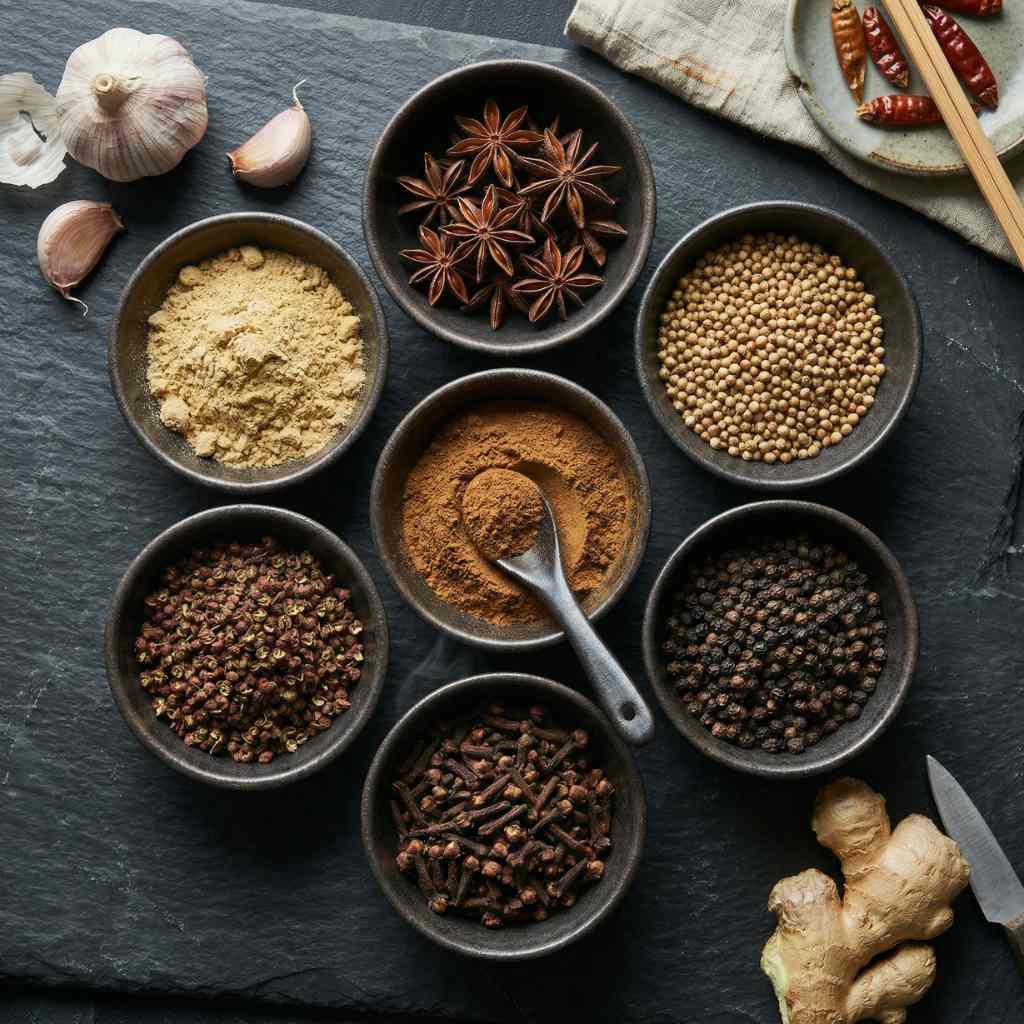
Chinese herbs are not only very tasty, they also have many other benefits. In honor of the Chinese New Year we highlight 8 Chinese herbs and spices in this article that should not be missing from your spice cabinet.
What are Chinese herbs?
When you think of Chinese herbs, you might imagine very exotic herbs that we don't know in Western Europe. Nothing could be further from the truth; because we used to ship many spices from Asia to Europe, several Chinese herbs have become such a standard part of our cuisine that you may not even realize it. Chinese herbs and spices include, among others:
A large part of this list therefore consists of herbs you are already familiar with and probably already use regularly. In addition, there are also the less well-known in the Netherlands, yet widely used Chinese herbs such as Szechuan pepper, also called sichuan pepper.
If you are looking for a Chinese spice mix, you are well served with one of the world's most famous and oldest mixes: five-spice powder. This consists of sichuan pepper, anise seed, fennel seed, cinnamon and clove. And there is a reason these 5 spices were chosen. Each of the five spices represents one of the five basic tastes of Chinese cuisine: sweet, sour, bitter, salty and savory.
Cooking with Chinese herbs
Want to cook with Chinese herbs? Below we describe what each of the herbs mentioned above is perfect for:
Ginger
Because of its fresh-sharp flavor, ginger is very tasty in both sweet and savory dishes. Think of babi ketjap, babi pangang, fish dishes and sushi. Note: ginger powder has an even sharper taste than fresh ginger. 1 teaspoon of powder is equivalent to 2 centimeters of fresh ginger.
Star anise
Star anise is not only delicious in tea, it also forms a good combination with (pork) meat, fish or with rhubarb. Star anise, despite (or actually because of!) its strong, sweet character, brings out the flavor of the main ingredient even more.
Coriander
The citrus-like taste of coriander is an interesting talking point; some people love it, others think it tastes like soap! Read more about this love-hate relationship in our blog “Why some people love coriander and others don't”. If you do like coriander, it fits in both sweet and savory dishes and pairs well with spices such as cumin, chili pepper and garlic.
Garlic
Garlic is one of the sharp-sweet, versatile Chinese herbs that you can use as a flavoring in almost any dish. Meat, fish, poultry, soup, sauces, marinades, salads, vegetables; you name it.
Black pepper
Make your dishes stronger and spicier with the flavor of black pepper. This is the most popular spice in the world - and for good reason. It goes with a huge variety of dishes and ingredients. Always add pepper only at the end of the cooking process so that the flavor does not evaporate.
Clove
The warm, rich flavor of clove goes with both sweet and savory dishes; for example with sweet dishes that contain apples, oranges or pumpkin, or savory dishes such as a stew with beef or lamb. Combine clove easily with other herbs and spices such as ginger, mace, cinnamon and nutmeg, or with sage and pepper for a unique flavor.
Szechuan pepper
At first Szechuan pepper tastes more like pepper, while the aftertaste resembles the flavor of lemon zest. Very different, and therefore very interesting. Add to that a tingling and numbing sensation on your lips and the tip of your tongue, and you have one of the most unique Chinese herbs.
Five-spice powder
By adding five-spice powder to a hot dish, you give it some cooling. It is especially suitable for savory Asian dishes, but you can always experiment by adding it to other meals as well. Who knows, you might create a signature dish!
Medicinal properties of Chinese herbs
Did you know that Chinese herbs are used for more than just their flavor? They are also popular in the areas of health, medicinal properties and spirituality. Read below some of the purposes for which Chinese herbs are used:
Ginger as medicine and aid for weight loss
Ginger helps the body regulate blood sugar levels and absorb the right nutrients. It contains many vitamins and is known as a fat burner. Ginger also has a calming effect on the intestines. It therefore works as an antioxidant; it stimulates digestion and relieves bloating.
Garlic for a health boost
Did you know that it lowers cholesterol and also boosts your immune system? By eating garlic you can therefore prevent a cold and flu.
Star anise for stomach pain
Do you suffer from stomach cramps? Then star anise can help; this spice works as an antioxidant and therefore promotes digestion. In traditional Chinese medicine, star anise has been used for centuries as an antiviral agent. We now know that it is also effective against bacteria and fungal diseases.
Coriander as a healthy all-rounder
One of the healthiest Chinese herbs is coriander. It is healthy in several ways:
- It can lower blood sugar levels by as much as 50% when consumed with meals containing carbohydrates and fats.
- It contains phytosterols that can lower cholesterol levels by up to 30%. These phytosterols block the absorption of cholesterol from the digestive tract into the bloodstream.
- Coriander can prevent kidney stones.
- It has antioxidant properties that can protect against cancer.
- It reduces inflammation
- It promotes healthy digestion.
Read more about the health effects of coriander.
Health benefits of black pepper
Black pepper contains antioxidants, has anti-inflammatory properties and can lower cholesterol levels and blood pressure. But note; eating too much black pepper can lead to heartburn or indigestion.
Clove
In addition to the anti-inflammatory and antibacterial effects of clove, it also contains various vitamins: B12, C, E and K. It is also good for your digestion and is even called a ‘superfood’ by Spanish researchers.
Buy Chinese herbs at Natural Spices
Want to buy Chinese herbs? At Natural Spices you'll find 100% natural herbs and spices (plus sauces and marinades!) with fewer calories, fat, salt and sugar. That way you can really eat healthily without compromising on taste. Curious about the herbs of other world cuisines? Read our blog about the best herbs and spices for Indian dishes, or view our range of herbs by cuisine
5 FAQ – Cooking with Chinese herbs
1. What are the most important Chinese herbs for beginners?
If you’re starting out with Chinese herbs, ginger, garlic, star anise, coriander, black pepper, szechuan pepper and five-spice powder are real must-haves. With this base you can already prepare dozens of classic Asian dishes.
2. What is the difference between black pepper and szechuan pepper?
Black pepper gives a sharp, spicy heat. Szechuan pepper, on the other hand, provides a tingling, slightly numbing effect on the tongue with a fresh citrus-like aftertaste. So they are totally different taste experiences.
3. What do you use five-spice powder for?
Five-spice powder is ideal for meat dishes such as duck, pork or chicken, but also surprisingly tasty in stews or even in a savory marinade. It combines sweet, sour, bitter, salty and umami in one mix.
4. Are Chinese herbs healthy?
Many Chinese herbs contain antioxidants and are traditionally used to support digestion. Think of ginger, garlic and star anise. Note: herbs are a supplement to a healthy diet and not a replacement for medical treatment.
5. When is the best time to add Chinese herbs during cooking?
Whole spices like star anise and clove are preferably added early in the cooking process so they can slowly release their aroma. Ground spices and black pepper are usually added later to prevent flavor loss.