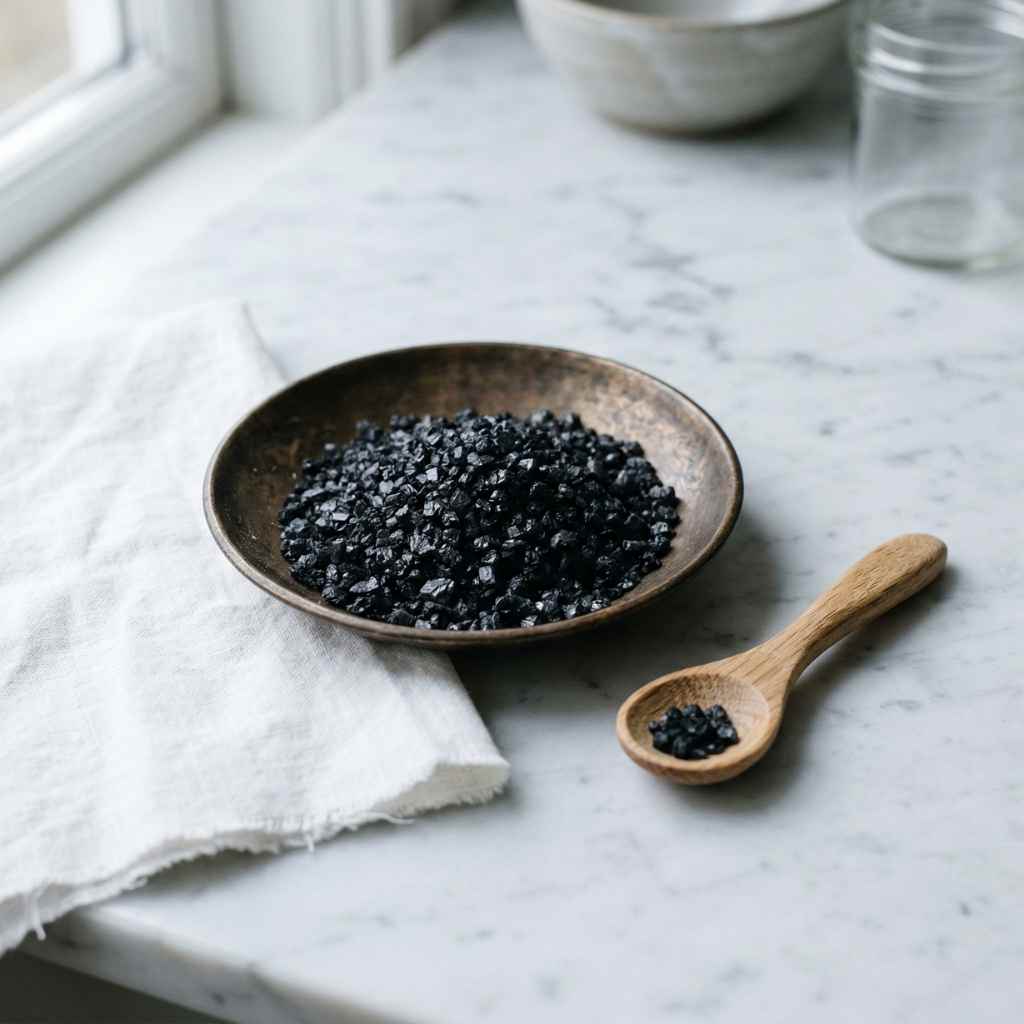
Black salt sounds mysterious - and it is a bit. Because not all "black" salt is actually black on your plate. And more importantly: the two best-known varieties differ completely in taste and use.
In this blog you will discover what black salt actually is, when to use which variant, and how to get the most out of it in your kitchen.
What is black salt?
Black salt is a collective name for different types of salt with a dark origin or appearance. The two best-known are:
- Hawaiian black lava salt (Black Lava Salt)
- Kala namak (Indian black salt)
They may look similar in name, but that's where the similarities pretty much end.
Hawaiian black lava salt
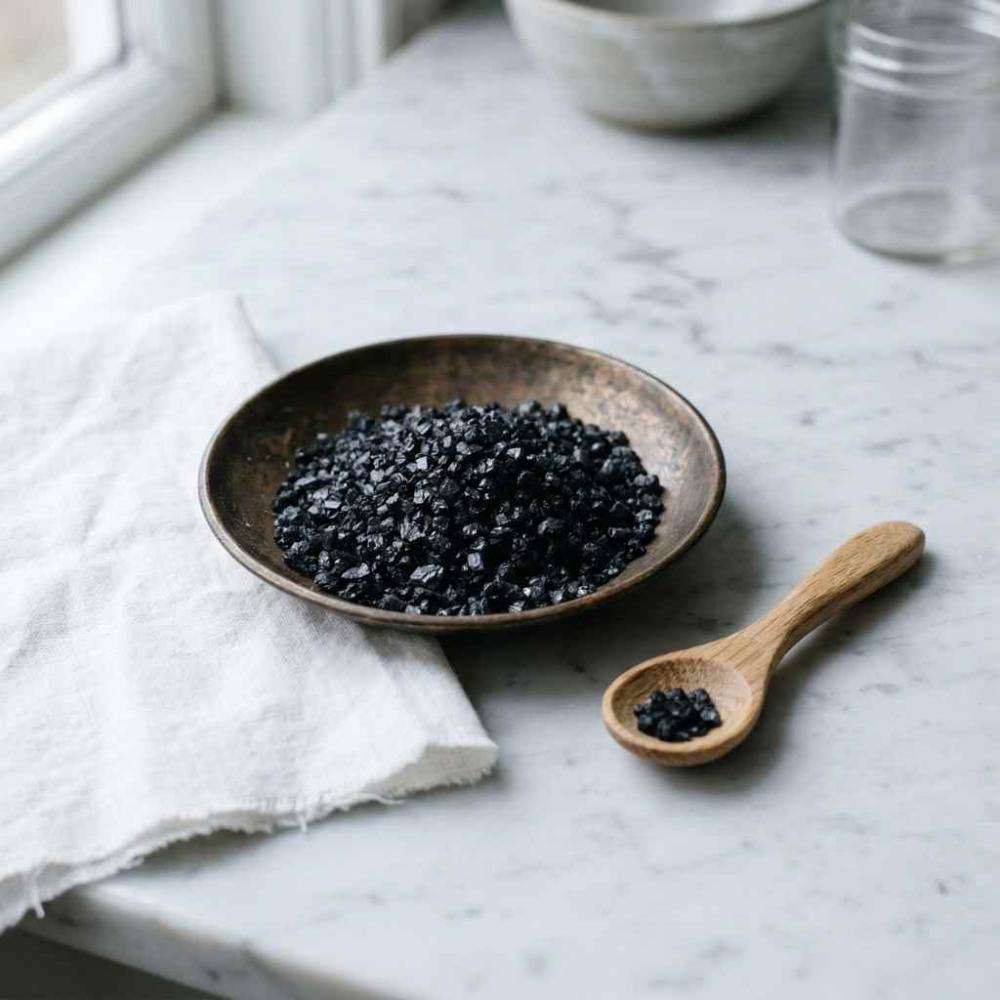
Lava salt is sea salt mixed with activated charcoal (often from coconut shells). This gives it its deep black color and subtle smoky character.

Taste & characteristics
- Mild and mineral
- Lightly smoky
- Crispy texture
- Intense black color (when dry)
What do you use it for?
Lava salt is a true finishing salt:
- Over grilled meat or fish
- On avocado toast
- Over eggs
- On salads for contrast
This is about visual effect + crunch.
Important: what happens to lava salt when it meets moisture?
This is where it often goes wrong.
As soon as lava salt comes into contact with moisture:
- the salt partially dissolves
- the activated charcoal remains behind
- the color fades to gray
Result: less contrast and sometimes a "bled" effect.
Practical tip (if you want the 'effect')
Always use lava salt: just before serving, on as dry a surface as possible
Not in dressings, not during cooking.
Kala namak (Indian black salt)

Kala namak is completely different and is all about flavor. It comes from volcanic regions around the Himalayas and contains natural sulfur compounds.
Taste & characteristics
- Strong sulfur smell (reminds of egg)
- Intense and savory
- Usually finely ground pink/gray
Why is kala namak called "black" salt?
Good question - because it usually doesn't look black.
- In raw form the crystals are dark (brown/black/purplish)
- After grinding it becomes pink to gray
So the name comes from the original form and traditional naming, not from how you see it in your jar.
What do you use kala namak for?
You use this salt not for looks, but for flavor:
- In vegan dishes (for "egg" flavor)
- On tofu scramble
- In chutneys and chaat
- Over fruit for a savory twist
How to use black salt smartly?
- Use lava salt only at the end
- Use kala namak sparingly (strong!)
- Combine with fresh flavors like citrus
- Play with contrast: black salt works best on light-colored dishes
Is black salt healthy?
Like any salt it contains sodium, so use in moderation.
Interesting nonetheless:
- Kala namak is so intense that you often need less of it
- Lava salt helps give your dishes more experience without extra ingredients
Conclusion
Not all black salt is truly black and you taste the difference immediately.
- Lava salt → for appearance and finishing touch
- Kala namak → for deep, savory flavor (especially in vegan cooking)
Use them well, and you add not just salt, but contrast, character and experience.
Frequently asked questions
1. Does lava salt stay black on your dish?
Only if it stays dry. With moisture the color fades.
2. Does kala namak really taste like egg?
Yes, because of natural sulfur compounds.
3. Can you heat lava salt with the food?
Not recommended — you lose color and texture.
4. Is kala namak healthier than regular salt?
Not necessarily, but you often need less of it.
5. Can you use them interchangeably?
No, they have totally different functions.