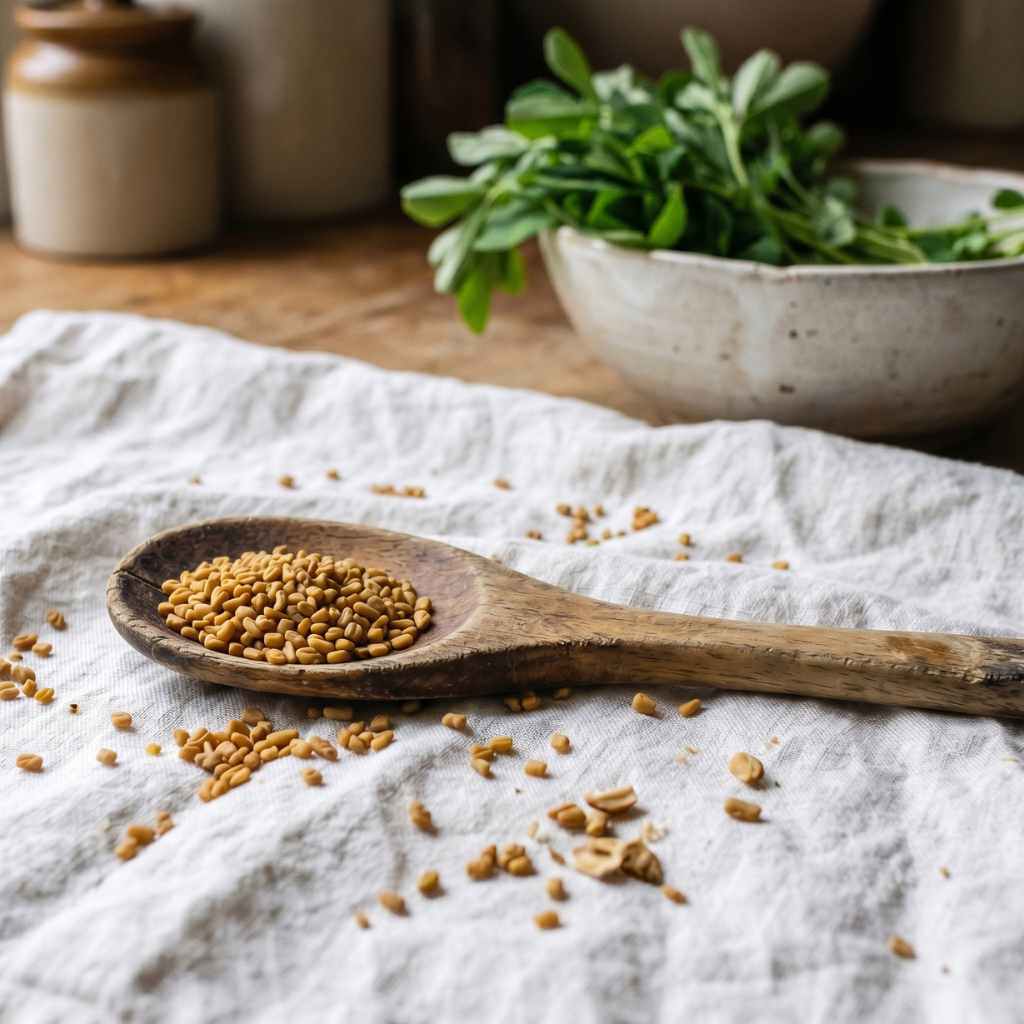
Fenugreek is one of those herbs you have probably eaten more often than you think — without realizing it. It’s in curries, spice blends and even in some breads and cheeses. Yet many people don’t know exactly what it is, how it tastes or how to use it themselves.
In this article we explain it simply, so you can start using it in the kitchen right away.
What is fenugreek?
Fenugreek is an herb that mainly grows in regions around the Mediterranean, India and North Africa. Both the leaves and the seeds are used, but in Dutch cooking you usually encounter the fenugreek seed.
The seeds are small, angular and golden brown in color. You can use them whole or ground into powder. Fenugreek is also known by the name bockshornklee, which you sometimes see on packaging.
What does fenugreek taste like?
The taste of fenugreek is quite pronounced and unique. You can best describe it as:
- Slightly bitter
- Nutty
- Warm and spicy
- With a subtle sweet note (sometimes reminiscent of maple syrup)
That combination makes fenugreek interesting: it gives dishes more depth without immediately dominating — provided you dose it correctly.
Tip: briefly toast fenugreek seeds in a dry pan before using them. This makes the flavor milder and rounder.
What do you use fenugreek for?
Fenugreek is used worldwide, especially in Indian and Middle Eastern cuisine. You can apply it in various ways:
- In curries and stews
- As part of spice blends (such as curry or garam masala)
- In bread and savory baked goods
- With vegetable and lentil dishes
- As a base for herbal tea
It’s not an herb that takes center stage, but rather one that enhances other flavors.
Using fenugreek: whole or ground?
You can use fenugreek both whole and ground. Which you choose depends on the dish.
Whole fenugreek seed:
- Slightly stronger and more bitter in taste
- Often toasted first or cooked with the dish
- Ideal for stews and curries
- Milder and easier to dose
- Ready to use directly in spice blends or sauces
- Suitable for quick preparations
If you choose convenience, ground fenugreek is often the most accessible option.
What does fenugreek do to your body?
Fenugreek has long been used in various traditional cuisines and herbal preparations. It is often mentioned in connection with:
- Digestion
- Regulation of blood sugar levels
- Support of appetite
It’s good to know that many of these uses come from traditional practice. Therefore, consider fenugreek primarily as a flavoring, not as a miracle cure.
How much fenugreek do you use?
Fenugreek has a strong flavor, so it’s important to dose it carefully.
- Start with about ½ teaspoon
- Taste and increase if needed
- Pairs well with cumin, coriander and turmeric
Too much fenugreek can make a dish quickly turn bitter, so less is often better.
Why is fenugreek in so many spice blends?
Fenugreek is often used as a ‘binding’ flavor in spice blends. It provides:
- More depth of flavor
- A warm, full base
- Better balance between other spices
You don’t always taste it directly, but if you omit it, you often miss something in the whole.
Buying fenugreek: what to look for?
When buying fenugreek, pay attention to a few things:
- Form: whole or ground, depending on use
- Smell: should smell warm and spicy
- Freshness: the fresher, the more flavor
For everyday use ground fenugreek is handy, while whole seeds are more suitable for slow-cooked dishes.
Want to try fenugreek yourself? In our shop you can find both fenugreek seed (whole) and ground fenugreek — fresh and ready to use in your dishes.
Conclusion
Fenugreek may not be the most well-known herb, but it is one of the most versatile. It gives dishes a warm, slightly nutty depth and is used worldwide in a variety of cuisines.
Once you know how to use it, you will increasingly recognize it — and use it yourself.
FAQ about fenugreek
1. What exactly is fenugreek?
Fenugreek is an herb whose seeds are mainly used in cooking. It is common in Indian and Middle Eastern dishes.
2. What does fenugreek taste like?
Fenugreek has a slightly bitter, nutty taste with a subtle sweet note that sometimes resembles maple syrup.
3. How do you use fenugreek in the kitchen?
You can use fenugreek whole (for example in stews) or ground in spice blends and sauces.
4. Is fenugreek healthy?
Fenugreek is traditionally used in various cuisines and herbal preparations, but consider it primarily as a flavoring within a varied diet.
5. Can you eat fenugreek raw?
Yes, but the taste is then quite bitter. It is often more enjoyable to toast it first or cook it with the dish.