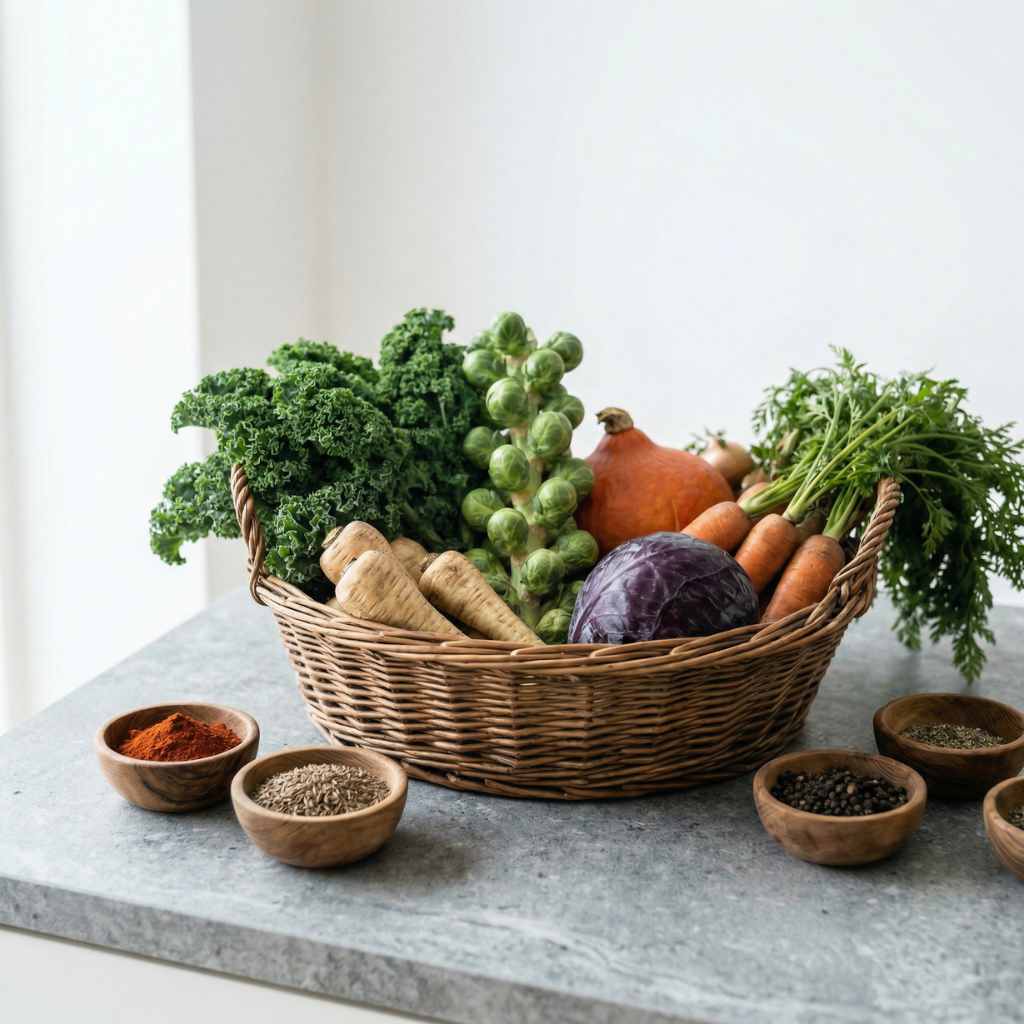
What are winter vegetables and how do you prepare them in a unique, flavorful way? In this article we name 6 winter vegetables, how to prepare them deliciously and which dishes they suit well.
What are winter vegetables?
Winter vegetables actually have a very simple definition: they are the vegetables that are harvested and/or eaten during the winter months. Why does it matter whether you eat winter vegetables in winter or summer? By eating seasonal products, you benefit from extra tasty, more nutritious vegetables. This is because the vegetables are freshly harvested, instead of frozen until the months when they are not grown. Below we name 6 popular winter vegetables and how to make them even tastier this winter.
KALE
This typically Dutch winter vegetable of course should not be missing from the list. Kale is the quintessential winter fare in our cold little country. Want to give this classic an original twist? Add some five-spice powder or ginger for a sharp kick. Furthermore you can use the following herbs to:
- Give your kale a fresh flavor: Coriander
- Give it a savory/herby taste: Thyme
- Enhance that typically Dutch flavor: Stamppot herbs (tomato, lemon and nutmeg)
BRUSSELS SPROUTS
You may not have liked them as a child, but Brussels sprouts can definitely become one of the tastiest winter vegetables with the right herbs and preparation. Brussels sprouts also contribute enormously to your immune system - something that is no luxury in winter. Did you know, for example, that Brussels sprouts contain three times as much vitamin C as oranges? Brussels sprouts work well in oven dishes; by roasting them in the oven instead of boiling them in hot water, they taste less bitter and sometimes even slightly sweet. In a casserole with creamy cheese sauce, bacon bits and mashed potatoes, Brussels sprouts come into their own. Add some rosemary to the casserole to make the sprouts taste even better.
RED CABBAGE
Red cabbage can be prepared in various ways; you can cook this winter vegetable, stir-fry it, or roast it in the oven. Each method of preparation suits a different kind of herb.
- When cooking red cabbage, clove and cinnamon are good spices to give red cabbage a warm flavor. If you prefer a slightly bitter taste, add bay leaf instead.
- For stir-frying red cabbage, garlic is a good flavoring. Sauté the garlic granules briefly before adding the red cabbage. This way the garlic enhances the cabbage's flavor.
- Putting the red cabbage in the oven? A herb that pairs well with this is thyme. This gives the red cabbage a savory, herby taste.
SOUR CABBAGE (SAUERKRAUT)
Sauerkraut, like the aforementioned winter vegetables, also goes very well with bay leaf, thyme, garlic and clove. Other herbs that complement sauerkraut are caraway seed (for a spicy, anise-like flavor), Provençal herbs (for a French touch), or curry (for sauerkraut with an Eastern flavor). Sauerkraut is especially popular as a stamppot vegetable. Click here for more stamppot inspiration.
WHITE CABBAGE
To season white cabbage, the following herbs are recommended:
- Pepper; and we don't mean just the standard pepper. Did you know there are different types of pepper to experiment with, such as pink pepper?
- Dill for a fresh, lemon-like aroma.
- Cumin for a nutty flavor and warmth.
- Coriander; for an herby taste.
This is one of the winter vegetables often used as an ingredient for stamppot or soup. Another preparation is to use the cabbage in a casserole. You can also stir-fry white cabbage, for example in combination with mushrooms, potato and/or green beans.
CELERIAC
Celeriac is often seen as a split pea soup vegetable. Additionally, you can puree the winter vegetable for a stamppot, roast or boil it. Suitable herbs for celeriac include garlic, sage leaf, thyme and rosemary. These herbs give the celeriac a warm, savory flavor, with a slight bitterness in between.
Buy your herbs for winter vegetables at Natural Spices
Do you want to prepare your winter vegetables as deliciously as possible, with the most flavorful herbs? Natural Spices offers organic, healthy, and above all tasty herbs and spices to season your dishes. Buy your herb (mixes), spices, marinades and cooking or baking aids easily online.
Natural Spices sells 100% natural, healthier flavorings. That way you can consciously enjoy an extraordinary taste experience - whether you are a professional preparing a Michelin-star menu, or a home cook making a quick bite with winter vegetables just that bit tastier.
5 FAQs Winter Vegetables
1. What exactly are winter vegetables?
Winter vegetables are vegetables that naturally grow in the cold months or are well resistant to low temperatures. Think of kale, Brussels sprouts, parsnip, celeriac and red cabbage. They are often firmer in texture and rich in nutrients.
2. Which winter vegetables are the healthiest?
Many winter vegetables contain lots of fiber, vitamin C and antioxidants. Kale and Brussels sprouts are known for their high vitamin content, while root vegetables like parsnip and celeriac are rich in fiber and keep you feeling full longer.
3. Are winter vegetables seasonal in the Netherlands?
Yes, many winter vegetables are grown locally in the Netherlands and are in season from about October to March. Seasonal vegetables are often fresher, more flavorful and more sustainable because they require less transport and storage.
4. How do you best prepare winter vegetables?
Winter vegetables come into their own when roasted in the oven, prepared in the air fryer, stewed or used in soups and casseroles. Through caramelization they gain extra depth and sweetness. Combine them with warm spices such as paprika powder, cumin or thyme for extra flavor.
5. Can you use winter vegetables in a healthy diet?
Absolutely. Winter vegetables are often low in calories and high in fiber, making them suitable for a balanced diet. They are filling, support digestion and fit perfectly into both vegetarian and protein-rich meals.