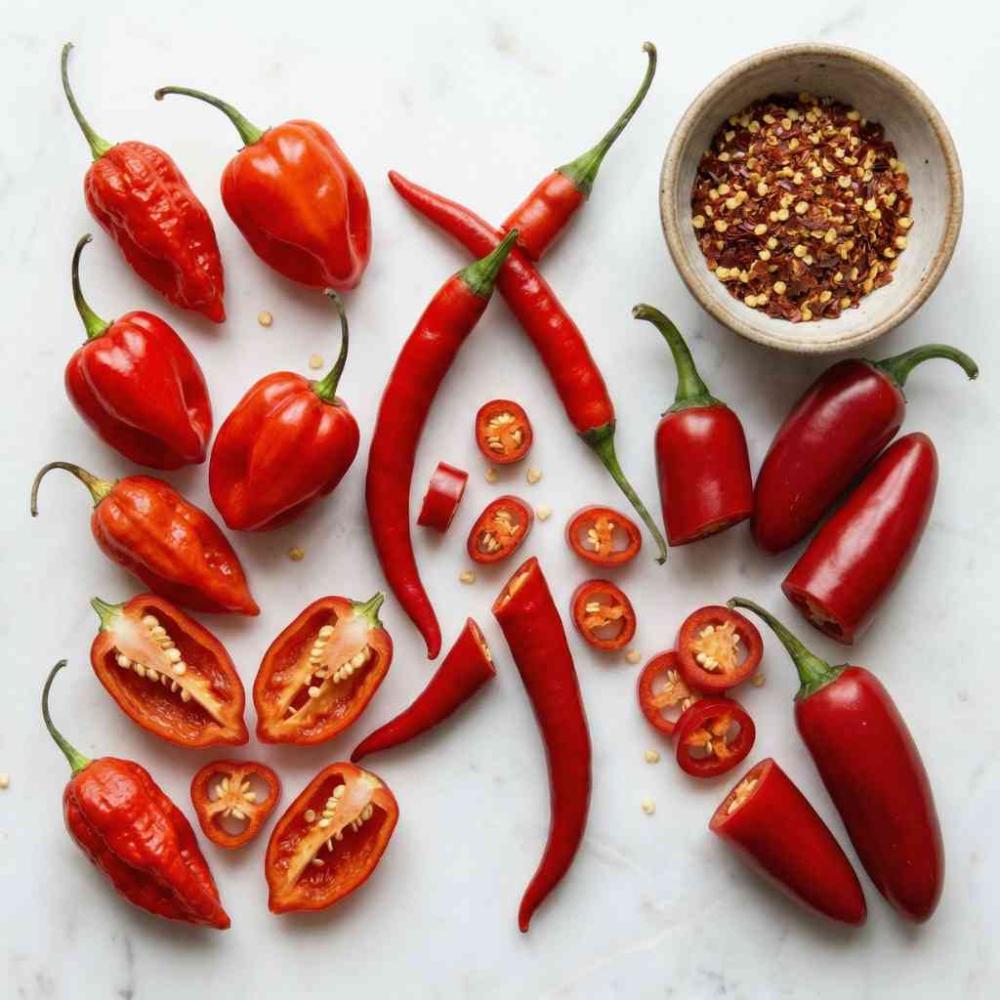
Chili peppers add heat, warmth and character to dishes. From Mexican salsas to Asian curries and spicy sauces, they are indispensable in cuisines around the world. Yet their origin lies entirely in the warm regions of Central and South America.
All chili peppers belong to the genus Capsicum. After the discovery of the Americas, Spanish and Portuguese traders spread the peppers across Europe, Africa and Asia. Within just a few centuries, chili peppers became a staple ingredient in countless cuisines.
What exactly is a chili pepper?
There are approximately 30 species within the genus Capsicum. The most common species found in supermarkets is Capsicum annuum. This group includes bell peppers, jalapeños and cayenne peppers.
Botanically speaking, chili peppers are not vegetables but berries. The plant is officially considered an annual (the term annuum means “yearly”), but in warm climates without frost it can grow into a perennial shrub.
Why are chili peppers hot?
The heat of chili peppers is caused by capsaicin. This compound stimulates the heat receptors in your mouth. Your brain interprets this as heat or even pain, even though there is no actual increase in temperature.
Chili peppers also contain a high amount of vitamin C — even more than lemons per equal weight. This makes them not only flavourful but also nutritious.
People who regularly eat spicy food often notice that their body becomes accustomed to capsaicin. As a result, the heat feels less intense over time.
The Scoville Scale: how hot is hot?
The heat of chili peppers is measured usingThe higher the number, the more capsaicin the pepper contains.

5 well-known red chili peppers
Madame Jeanette
Highly aromatic and popular in Surinamese cuisine. Intensely hot with a fruity undertone.
Cayenne pepper
Often used dried and ground. Provides a direct, sharp heat.
Jalapeño Network
The ripe version of the jalapeño. Slightly sweeter and milder than the green variety.
Red Habanero
Small, bright red and powerful. Tropical aroma with intense heat.
Carolina Reaper
One of the hottest peppers in the world. Only suitable for true heat enthusiasts.
Rules of thumb for heat
-
The smaller the pepper, the hotter it often is.
-
Green (unripe) peppers are usually hotter than red (ripe) ones, which tend to become slightly sweeter.
-
Most of the capsaicin is found in the white inner membrane (the pith where the seeds attach).
Using chili peppers in the kitchen
Chili peppers can be finely chopped and added fresh to stir-fries, simmered in curries and stews, dried and ground into chili powder, or used in marinades and spicy sauces.
If a dish becomes too spicy, add dairy, coconut milk, or something sweet. Water does not help much — fats neutralise capsaicin more effectively.
Frequently asked questions about chili peppers
1. Are chili peppers healthy?
Yes. They contain large amounts of vitamin C and antioxidants. When used in moderation they fit well into a healthy diet.
2. Where is most of the heat in a chili pepper?
In the white inner membrane where the seeds are attached.
3. Can you freeze chili peppers?
Yes, both whole and chopped. The texture may change slightly, but the flavour remains.
4. What is the difference between jalapeño and habanero?
Jalapeños are relatively mild, while habaneros are much hotter and more aromatic.
5. Do peppers become milder when they turn red?
Often they do. As peppers ripen they develop more sugars, which gives them a rounder flavour.