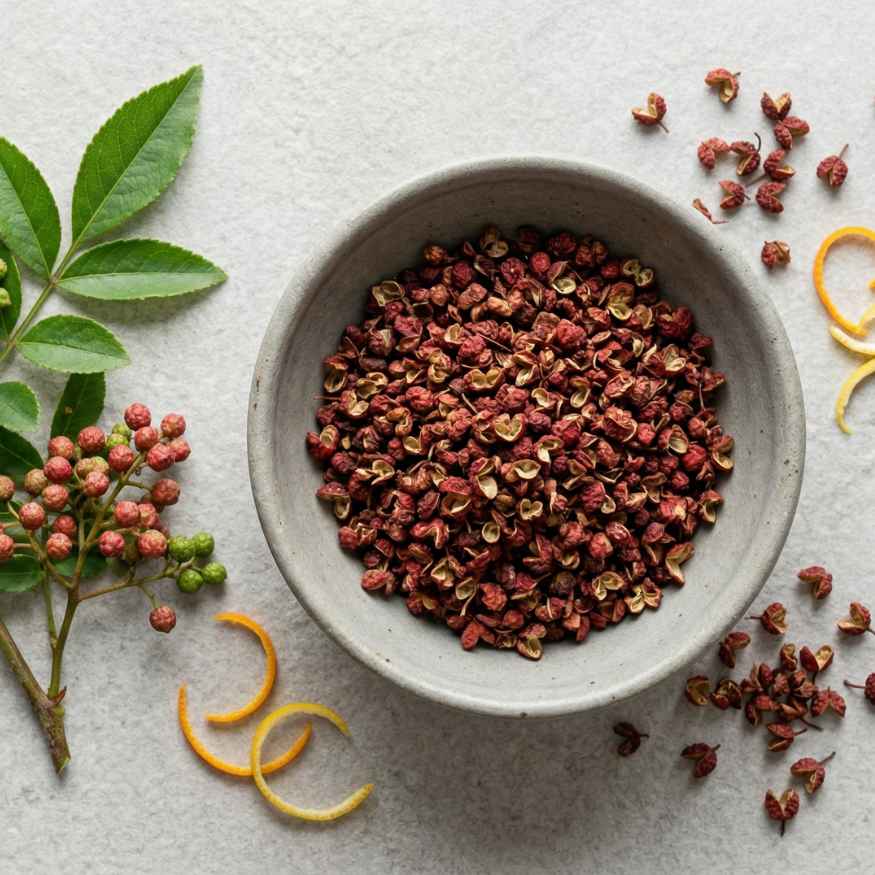
Szechuan pepper (also written as Sichuan pepper) is often mistaken for a “real” pepper, but botanically speaking that is not correct. It is not related to black pepper or chilli peppers, but is a spice with its own unique character – and a remarkable effect on your taste buds.
In this blog you will learn what Szechuan pepper actually is, where it comes from, why it tastes so different from other peppers, and how you can use it in your cooking.
What Is Szechuan Pepper?
Despite its name, Szechuan pepper does not belong to the classic pepper families. Broadly speaking, three groups are usually considered the “true” peppers:
-
Black pepper – the genus Piper (family Piperaceae)
-
Chilli peppers – the genus Capsicum (family Solanaceae)
-
Allspice – the genus Pimenta (family Myrtaceae)
Szechuan pepper belongs to none of these groups. Instead, it comes from the dried husks of the small fruit of plants from the genus Zanthoxylum, particularly:
-
Zanthoxylum piperitum
-
Zanthoxylum simulans
-
Zanthoxylum schinifolium
The spice is named after the Chinese province of Sichuan, where it has traditionally been used for centuries. Today, Szechuan pepper is cultivated and widely used across Asia, including in Tibet, Bhutan, Nepal and Japan.
Where Does the Name Come From?
The scientific name Zanthoxylum originates from Greek:
-
xanthos meaning “yellow”
-
xylon meaning “wood”
Together this translates to “yellow wood”, referring to the striking yellow colour of the plant’s wood. The second part of the name, piperitum, can be translated as “pepper-like”.
Why Does Szechuan Pepper Taste So Unique?
Before chilli peppers arrived in Asia from the New World around the 16th century, Asian cuisines relied on other ingredients to create pungency and depth of flavour. Black pepper was available, but it was often considered sharp yet somewhat one-dimensional.
Szechuan pepper offered something different.
It provides:
-
A mild peppery sharpness
-
A fresh, citrus-like aroma similar to lemon zest
-
A distinctive tingling and slightly numbing sensation on the lips and tongue
This tingling effect is caused by a compound called hydroxy-alpha-sanshool. This molecule stimulates certain nerve endings that normally respond to touch and cold. The result is a unique sensory experience often described in Chinese cuisine as the characteristic “má” sensation.
It is not heat like chilli peppers produce – rather it is a playful mix of tingling, freshness and aromatic complexity.
A Connection to the Citrus Family
Another interesting aspect of Szechuan pepper is that the plant is related to the citrus family. This explains the fresh, slightly grapefruit-like notes you can detect in its flavour.
Because of this combination of citrus brightness and gentle tingling, Szechuan pepper works particularly well with:
-
Rich meats such as duck or pork belly
-
Tofu and aubergine
-
Noodle and stir-fried dishes
-
Dressings made with soy sauce and rice vinegar
Szechuan Pepper in Spice Blends
Szechuan pepper is an essential component of Chinese five-spice powder. This classic blend usually combines star anise, fennel, cinnamon, cloves and Szechuan pepper to create a warm, aromatic seasoning for meat and vegetable dishes.
Japan has its own variation: Shichimi tōgarashi, also known as seven-spice powder. In addition to the Japanese variety of Szechuan pepper, called sanshō, this blend often includes:
-
Ginger
-
Hemp seeds
-
Roasted orange peel
-
Sesame seeds
-
Nori (seaweed)
It is a beautiful example of how a single spice has influenced multiple culinary traditions across Asia.
How to Use Szechuan Pepper in Cooking
A few practical tips:
-
Lightly toast the pepper husks in a dry pan to release their aroma
-
Grind them fresh in a mortar or spice grinder
-
Use them sparingly, as their flavour and effect are quite powerful
Try adding a pinch to:
-
A marinade for chicken or tofu
-
An Asian-style vinaigrette
-
A dry rub for pork belly
-
Homemade chilli oil
5 Frequently Asked Questions About Szechuan Pepper
1. Is Szechuan pepper spicy?
Not in the same way as chilli peppers. Instead of heat, it produces a tingling and slightly numbing sensation combined with citrusy aromas.
2. Can you eat the peppercorns whole?
Yes, but usually only the dried husks are used. The small black seeds inside are often bitter and typically removed.
3. What is the difference between Szechuan pepper and black pepper?
Black pepper delivers straightforward heat, while Szechuan pepper adds citrus, tingling sensations and aromatic complexity.
4. Is Szechuan pepper the same as sanshō?
Sanshō is the Japanese variety within the same plant genus (Zanthoxylum), but it generally has a slightly fresher, greener flavour.
5. What dishes pair best with Szechuan pepper?
It is most commonly used in Chinese and Japanese cuisine, but it also works beautifully in modern fusion cooking and even in desserts such as chocolate.
Szechuan pepper is therefore far more than just another pepper. Its unique combination of citrus freshness, aromatic depth and tingling sensation has made it an iconic ingredient in Asian cuisine – and an increasingly popular spice in kitchens around the world.