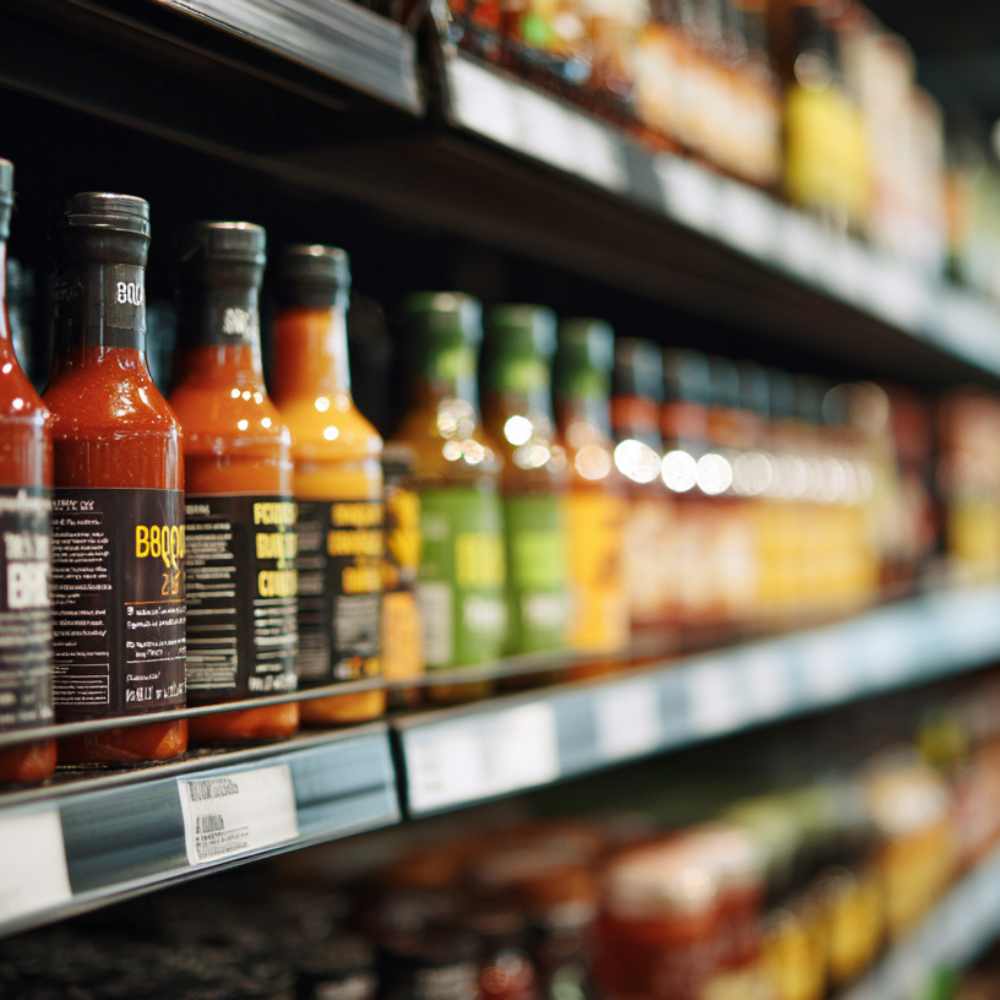
Preserving food products is a crucial part of product development in the food industry. Whether it concerns sauces, juices, jams, marinades or beverages, a well-designed preservation strategy is essential for both food safety and commercial shelf life.
For producers and private label projects, preservation is not only about preventing spoilage. It also involves regulatory compliance, clean label positioning, export requirements and cost efficiency.
In this article, we share the key principles for professionally preserving food products.
What is food preservation?
Food preservation means controlling or eliminating the factors that allow bacteria, yeasts and moulds to grow. Microorganisms require specific conditions to multiply. By influencing one or more of these factors, shelf life can be significantly extended.
The most important factors you can control are:
-
pH level (acidity)
-
Oxygen
-
Temperature
-
Water activity (Aw value)
-
Preservatives
An effective preservation strategy usually combines several of these techniques.
1. Lowering the pH level (acidity)
Reducing the pH level is a common method used when preserving sauces and dressings. By adding ingredients such as vinegar, acetic acid or citric acid, the growth of many bacteria can be inhibited.
Products with a pH below 4.5 significantly limit microbial growth. This approach is widely used for:
-
BBQ sauces
-
Pickled products
-
Marinades
-
Salad dressings
For retail distribution and export markets, proper pH monitoring is essential.
2. Limiting oxygen through packaging
Oxygen can cause oxidation, discoloration and rancidity. It can also stimulate the growth of certain microorganisms.
Professional packaging solutions include:
-
Hot-fill processing
-
Vacuum packaging
-
Modified Atmosphere Packaging (MAP)
-
Packaging with high oxygen barriers
The most suitable option depends on the product category and distribution channel (ambient or refrigerated).
3. Temperature control
Cooling, pasteurisation or sterilisation may be necessary to guarantee microbiological safety. For chilled products, maintaining a reliable cold chain is critical.
For retail products with extended shelf life, pasteurisation is often combined with pH reduction or preservatives.
4. Lowering water activity (Aw value)
Water activity (Aw) measures how much free water is available for microorganisms to grow. By adding sugar, salt or other binding ingredients, the Aw value can be reduced.
This principle is commonly applied in products such as:
-
Jam
-
Sauces
-
Spice blends
-
Marinades
Lower Aw levels significantly slow down microbial growth and help improve product stability.
5. Using preservatives (E-numbers 200–299)
Preservatives such as sodium benzoate (E211) and potassium sorbate (E202) are used to inhibit yeasts, moulds and certain bacteria.
There is no single preservative that works best for every product. The correct choice depends on several factors, including:
-
The product’s pH level
-
Target microorganisms (yeasts, moulds or bacteria)
-
Recipe formulation
-
Storage conditions
-
Desired clean label positioning
Food preservation is always product-specific. A preservative that works well in an acidic sauce may not be effective in a protein-rich dressing or beverage.
Label analysis as a starting point
A practical first step is to analyse comparable products on the market. Preservatives are typically listed on labels with E-numbers between E200 and E299.
However, label comparison only provides limited insight. Processing conditions, packaging and formulation together determine the final shelf life.
The importance of shelf-life testing
Professional testing is essential before launching a product to market. Typical tests include:
-
Microbiological challenge tests
-
Shelf-life studies
-
Stability testing (colour, flavour, oxidation)
-
Sensory evaluations
Without proper validation, the risk of quality issues, complaints or product recalls increases significantly.
From formulation to shelf: professional support
In product development, we work with specialised partners who provide support in:
-
Shelf-life testing
-
Microbiological advice
-
Recipe optimisation
-
Clean label strategies
-
International regulatory compliance
Are you developing a new product or looking to improve the shelf life of an existing recipe? We are happy to support you from concept to safe market introduction.
Frequently asked questions about food preservation (FAQ)
1. What is the best method to preserve sauces?
There is no universal solution. In practice, producers often combine pH reduction, pasteurisation, appropriate packaging and sometimes preservatives. The optimal method depends on the recipe and the desired shelf life.
2. What is the difference between pH and water activity?
pH indicates acidity, while water activity (Aw) measures the amount of free water available for microorganisms. Both factors influence microbial growth, but they operate in different ways.
3. Are preservatives always necessary?
Not always. Some products can achieve sufficient stability through low pH, reduced Aw and heat treatment. However, for longer shelf life or international distribution, preservatives are often used.
4. How long can a food product last without preservatives?
This varies greatly depending on the product. Factors such as pH level, Aw value, packaging, processing conditions and storage temperature all influence the final shelf life.
5. Why are shelf-life tests important in product development?
Shelf-life tests demonstrate that a product remains safe and stable throughout the intended shelf life. They are essential for food safety, regulatory compliance and successful retail distribution.