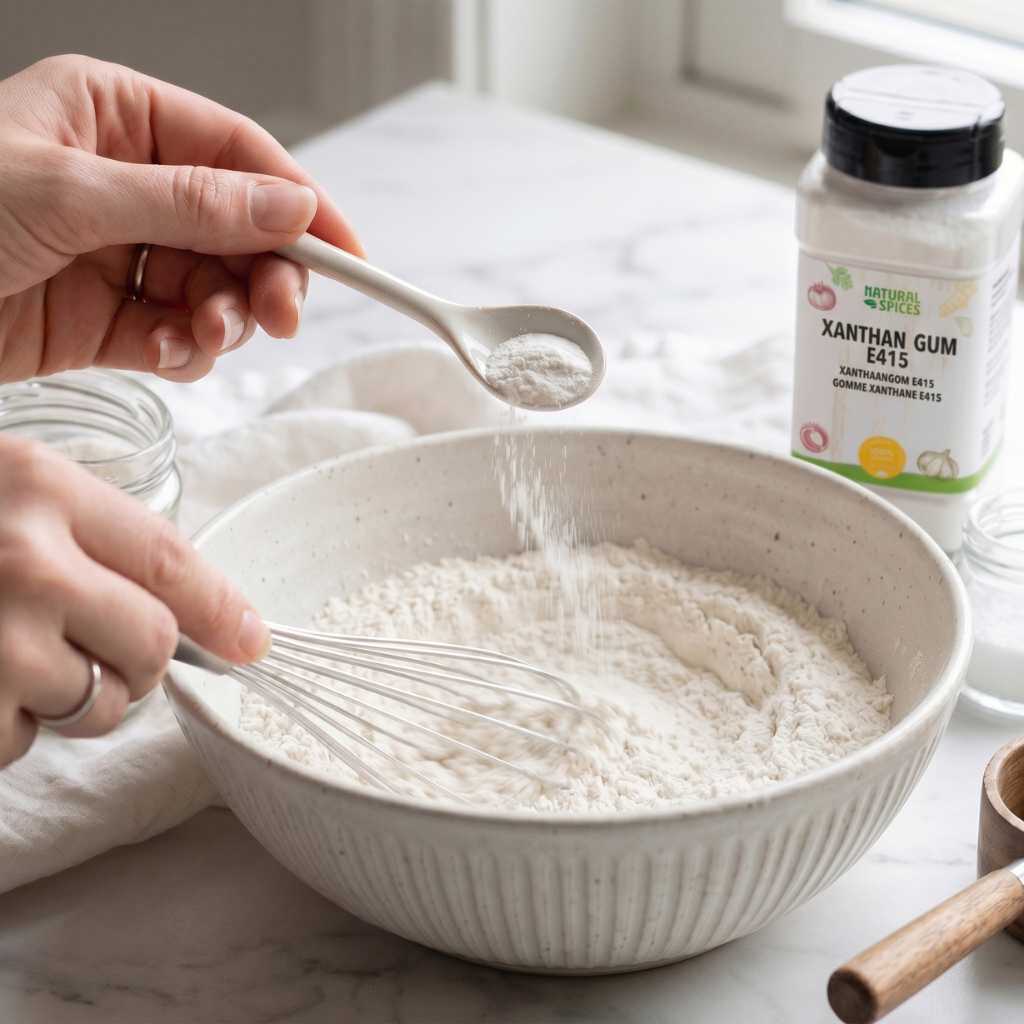
Xanthan gum may sound like a technical ingredient, but in the kitchen it is surprisingly practical. Especially if you bake gluten-free or vegan, it can make a world of difference. It provides structure, binding and a pleasant texture – exactly what you often miss without gluten or eggs.
In this blog we explain what xanthan gum is, when to use it and how to prevent your dish from going the wrong way in terms of texture.
What is xanthan gum?
Xanthan gum (E415) is a natural binder produced by fermentation of sugars. It is widely used in the food industry, but is also rapidly gaining popularity at home in the kitchen.
The main function? Binding and thickening ingredients. Think of creating a stable batter, a creamy sauce or a dough that doesn't fall apart.
Why is xanthan gum used?
1. Essential for gluten-free baking
When you bake without gluten, the natural elasticity and binding that gluten normally provides are missing. Xanthan gum takes over this role and ensures that your dough or batter holds together better.
2. Ideal in the vegan kitchen
Xanthan gum can (partly) take over the function of egg. It helps to bind ingredients and provides better structure in, for example, cakes, muffins and sauces.
3. Better texture and stability
It prevents ingredients from separating and ensures an even, consistent texture. This is a big advantage, especially for sauces and dressings.
Xanthan gum vs. guar gum
Xanthan gum is often compared to guar gum. Both act as binders and thickeners, but there are differences:
- Guar gum contains more fiber
- Xanthan gum is often more stable with temperature variations
- Xanthan gum gives a consistent texture more quickly
In practice this means that xanthan gum often works a bit more predictably in recipes.
How do you use xanthan gum?
Use is simple, but precision is important.
This is how you do it:
- Mix the xanthan gum first with the dry ingredients
- Then add the liquid ingredients
- Mix well for an even result
By mixing it dry first you prevent clumping and ensure a better distribution in your batter or dough.
Watch the dosage
This is where things often go wrong.
Xanthan gum is powerful. You only need a small amount. Use too much and the texture can quickly turn into a rubbery, sticky mass. And you want to avoid that at all costs.
Guideline:
- Always start with a small amount
- Only add more if it is really necessary
When do you use it?
Xanthan gum is especially useful for:
- Gluten-free breads and baked goods
- Vegan cakes and muffins
- Sauces and dressings
- Soups that need a bit more body
It is not an ingredient you need everywhere, but at the right moments it really makes a difference.
Buying xanthan gum
Want to try xanthan gum yourself?
Then take a look at our product and discover how you can easily add more structure and consistency to your dishes:
https://www.naturalspices.com/xanthan-gum-e415
FAQ about xanthan gum
1. Is xanthan gum natural?
Yes, it is produced via fermentation of sugars and is generally regarded as safe for consumption.
2. Can I replace xanthan gum?
Yes, for example with guar gum or psyllium fibers, but the function and dosage may differ.
3. How much xanthan gum should I use?
Usually between 0.2% and 0.5% of the total recipe weight. Always start low.
4. Is xanthan gum suitable for vegan recipes?
Yes, it is completely plant-based and is often used as an egg substitute.
5. Can I use xanthan gum in hot dishes?
Yes, it remains stable in both cold and hot applications.