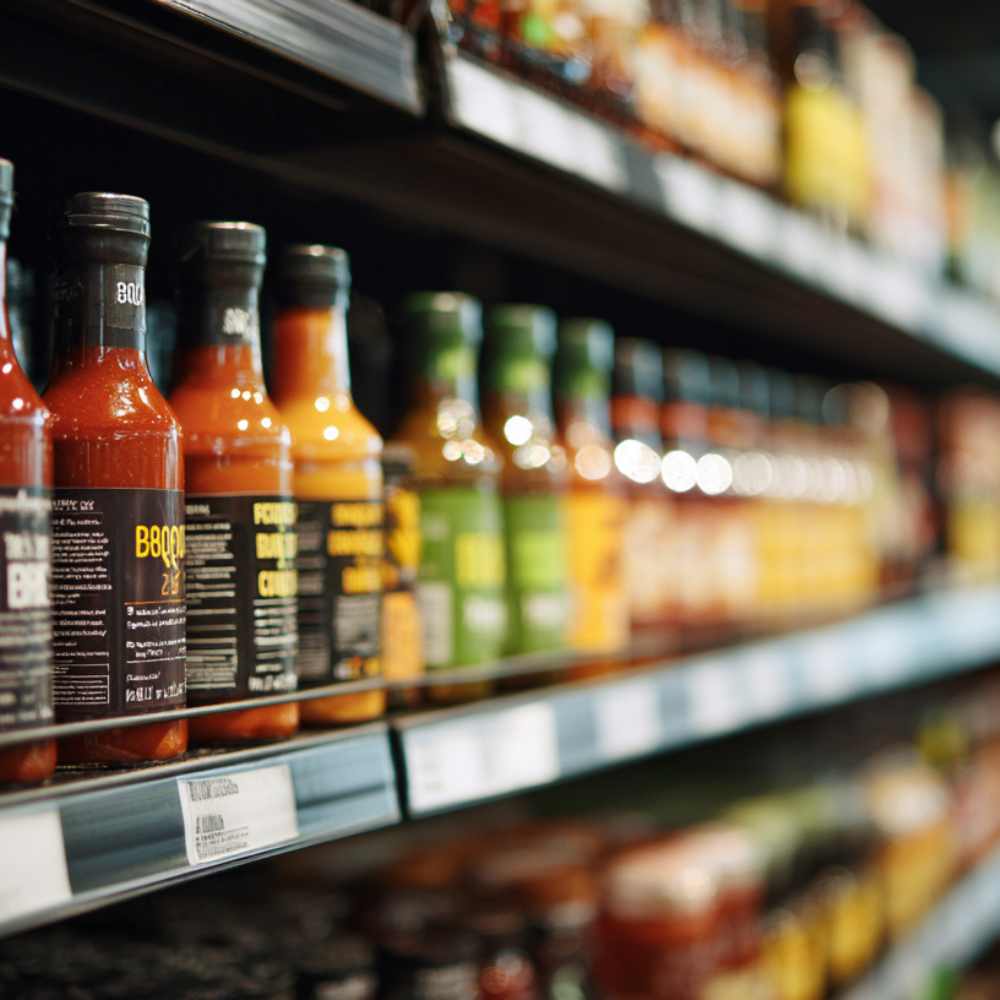
Preserving food is a crucial part of product development within the food industry. Whether it's sauces, juices, jam, marinades or beverages: without a well-thought-out preservation strategy a safe and commercially viable shelf life is impossible.
For manufacturers and private label projects preservation is not only about food safety, but also about legislation, clean label positioning, export possibilities and cost efficiency.
In this blog we share the main principles for professionally preserving food products.
What is food preservation?
Preservation means controlling or removing factors that cause bacterial growth, mold formation or quality loss. Micro-organisms require certain growth conditions. By influencing one or more of these factors, shelf life can be extended significantly.
The main knobs you can turn:
-
pH value (acidity)
-
Oxygen
-
Temperature
-
Water activity (Aw value)
-
Preservatives
An effective preservation strategy often combines multiple techniques.
1. Lowering pH (acidity)
Lowering the pH is a commonly used method for preserving sauces and dressings. Adding, for example, vinegar, acetic acid or citric acid inhibits the growth of many bacteria.
In products with a pH below 4.5 microbial growth is significantly restricted. This is especially relevant for BBQ sauces, pickles, marinades and dressings.
For export or retail introductions correct pH monitoring is essential.
2. Limiting oxygen via packaging
Oxygen can cause oxidation, discoloration and rancidity. In addition, oxygen promotes the growth of certain micro-organisms.
Professional solutions include hot-fill processes, vacuum packaging, Modified Atmosphere Packaging (MAP) and packaging with a high oxygen barrier.
The choice depends on product category and distribution channel (ambient or chilled).
3. Temperature control
Cooling, pasteurization or sterilization may be necessary to guarantee microbiological safety. For chilled products, cold chain management is a critical success factor.
For retail products with long shelf life pasteurization is often chosen in combination with pH reduction or preservatives.
4. Lowering water activity (Aw value)
Water activity (Aw) determines how much free water is available for bacterial growth. By adding sugar, salt or other binding ingredients the Aw value can be lowered.
This principle is often applied in jam, sauces, spice mixes and marinades.
A low Aw value significantly slows microbial growth and contributes to product stability.
5. Use of preservatives (E-numbers 200–299)
Preservatives such as sodium benzoate (E211) and potassium sorbate (E202) are used to inhibit yeasts, molds and bacteria.
Which preservative preserves the “longest” is not straightforward to answer. This depends on the product's pH, target organisms, formulation, storage conditions and the desired clean label positioning.
Preservation is tailor-made. What works in an acidic sauce does not automatically work in a protein-rich dressing or beverage.
Label analysis as a starting point
A practical first step is to analyze similar products on the shelf. Preservatives are recognizable by E-numbers between E200 and E299.
However note: a label does not tell the whole story. Process conditions, packaging and formulation together determine the final shelf life.
The importance of shelf life testing
For a safe market introduction professional tests are essential:
-
Microbiological challenge tests
-
Shelf life studies
-
Stability tests (color, taste, oxidation)
-
Sensory evaluations
Without validation the risk of quality loss, complaints or recalls is significant.
From formulation to shelf: professional support
In product development we collaborate with specialized partners for shelf life studies, microbiological advice, formulation optimization, clean label strategy and international legislation.
Would you like to develop a new product or optimize an existing formulation for longer shelf life? We are happy to think strategically with you — from concept to safe market introduction.
Frequently asked questions about food preservation (FAQ)
1. What is the best method to preserve sauces?
There is no universal method. In practice a combination is often used of pH reduction, pasteurization, suitable packaging and possibly preservatives. The optimal strategy depends on the formulation and desired shelf life.
2. What is the difference between pH value and water activity?
pH indicates acidity, while water activity (Aw) indicates how much free water is available for micro-organisms. Both factors influence bacterial growth, but in different ways.
3. Are preservatives always necessary?
Not always. Some products can be sufficiently preserved through low pH, low Aw and heat treatment. For longer shelf life or international distribution, however, preservatives are often desired or necessary.
4. How long is a food product shelf-stable without preservatives?
This varies greatly by product. Factors such as pH, Aw value, packaging, process conditions and storage temperature together determine the final shelf life.
5. Why are shelf life tests important in product development?
Shelf life tests demonstrate that a product remains safe and qualitatively stable throughout the intended period. This is essential for food safety, liability and successful retail introduction.