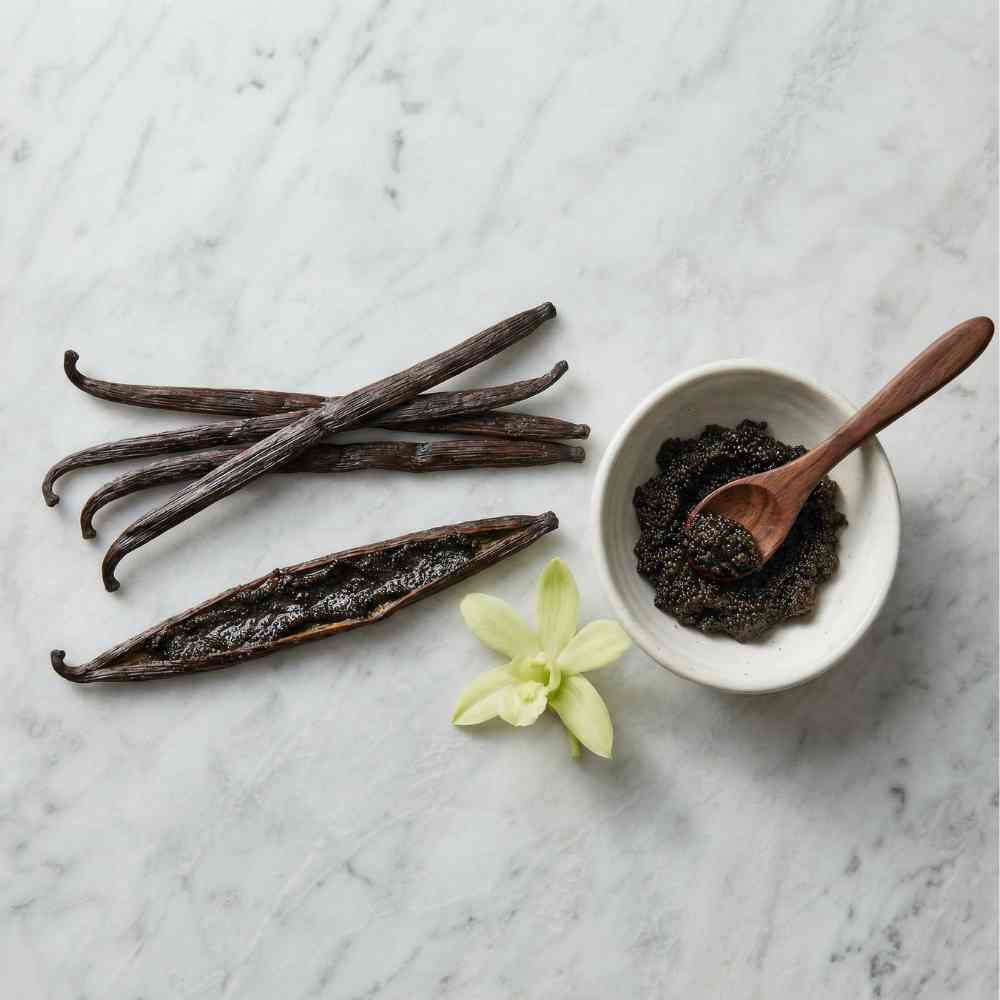
Madagascar vanilla is known worldwide as the most aromatic and high-quality type of vanilla. This precious flavoring is obtained from the pods of the tropical orchid Vanilla planifolia. Although many people speak of a “vanilla bean,” botanically it is a berry.
The origin of vanilla lies in southeastern Mexico and Guatemala. From there the plant spread to Europe via Spanish explorers and later to tropical areas around the world. Today Madagascar is the largest producer of genuine Bourbon vanilla.
The origin of Madagascar vanilla
Vanilla was brought to Europe in the 16th century by Spanish conquistadors led by Hernán Cortés. For a long time the plant could only bear fruit in Central America because a specific species of bee provided natural pollination there. It was not until the 19th century that the method for manual pollination of vanilla was discovered. This allowed cultivation to expand to places such as Madagascar, Réunion (formerly Bourbon) and Indonesia. Today Madagascar is responsible for the largest share of world production. The name Bourbon vanilla therefore refers to the former name of the island Réunion.
What does the name Vanilla planifolia mean?
The scientific name tells a lot about the plant.
Vanilla is derived from the Spanish vainilla, a diminutive of vaina (pod or sheath). Planifolia comes from Latin: planum (flat) and folium (leaf), referring to the plant’s flat leaves. The plant itself is a climbing orchid with yellow-green flowers that bloom for only one day. Outside Central America these flowers must be pollinated by hand. That labor-intensive process partly explains why vanilla is so valuable.
Why is vanilla so expensive?
After saffron, vanilla is the most expensive spice in the world. There are several reasons for that.
First, there is the manual pollination of each flower. In addition, the harvest is labor-intensive. The pods then undergo a long fermentation and drying process that takes months. Cultivation is also highly dependent on the climate and vulnerable to cyclones. Fresh vanilla pods contain vanillin-glucoside, an odorless compound. Only during the fermentation process does the characteristic aroma—vanillin—develop. Because real vanilla is expensive, synthetic vanillin is often used. This is usually produced from lignin, a component of wood, and is applied in a wide range of foods and beverages.
Flavor and use in the kitchen
Madagascar vanilla is known for its rich, creamy aroma, warm sweet taste and deep, almost caramel-like undertone.
Vanilla is mainly used in cakes, pies, pudding, custard, ice cream and desserts. A vanilla pod is usually split lengthwise and steeped for 20 to 30 minutes in milk, cream or water to release optimal flavor.
In addition, vanilla is increasingly combined with savory dishes, for example in sauces for shellfish or in subtle spicy marinades.
Vanilla and health
In the past vanilla was considered an aphrodisiac and a nerve stimulant. Today attention is mainly paid to possible antibacterial properties of vanillin. Some studies suggest that vanillin can inhibit certain bacteria, but vanilla remains primarily a culinary ingredient.
What everyone seems to forget a bit is that vanilla is simply a beautiful plant with delicate flowers and a fascinating growth process.
Frequently asked questions about Madagascar vanilla
1. Is a vanilla bean really a bean?
No. Botanically it is a berry, coming from an orchid.
2. What is the difference between Bourbon vanilla and other vanilla?
Bourbon vanilla comes from Madagascar, Réunion or surrounding islands and is known for its full, creamy flavor.
3. Why must vanilla be pollinated by hand?
Outside Central America the natural pollinating bee is absent, so each flower must be fertilized manually.
4. What is the difference between real vanilla and vanillin?
Real vanilla contains hundreds of aromatic compounds. Synthetic vanillin usually contains only one dominant flavor component.
5. How do you best store vanilla pods?
Store them airtight, in the dark and at room temperature. Do not place them in the refrigerator, as they can dry out there.