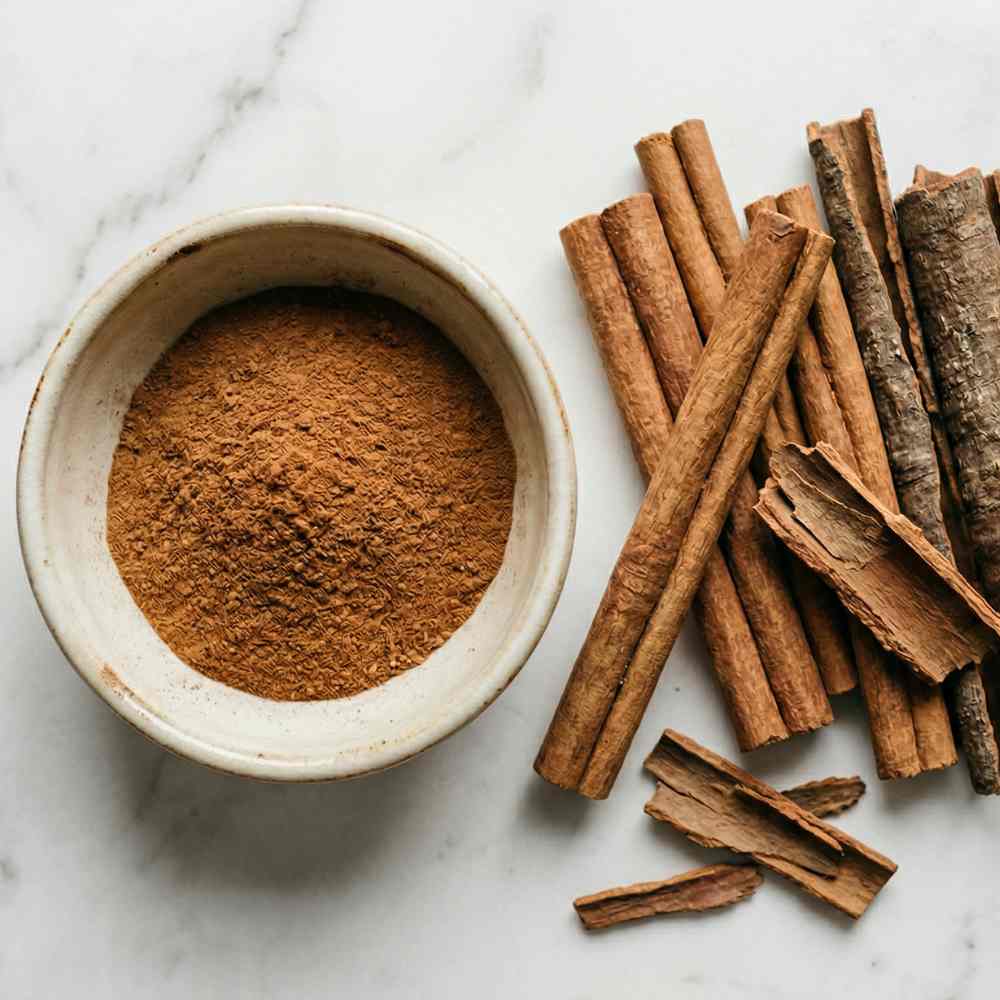
Cinnamon is one of the most beloved spices in the world. From warm apple pie to savory stews: the sweet, spicy flavor of cinnamon adds depth and character to countless dishes. But what exactly is cinnamon? Where does it come from? And what about the health claims surrounding this spice?
In this blog we dive into the origin, composition and possible effects of cinnamon.
What is cinnamon?
Cinnamon is the dried inner bark of the cinnamon tree, an evergreen tree from the laurel family. The best-known species is Cinnamomum zeylanicum, also called Ceylon cinnamon. This tree originally comes from Sri Lanka (formerly Ceylon), but is now cultivated in several tropical regions.
Besides Ceylon cinnamon there is another commonly used type: Cinnamomum cassia. This variant, often simply called “cassia,” is mainly produced in China and Indonesia.
The production of cinnamon is remarkable. The outer bark of young branches is removed, after which the inner bark loosens. During drying it naturally curls up into the familiar cinnamon sticks.
Where does the name cinnamon come from?
The name cinnamon has a long history dating back to antiquity. The Latin Cinnamomum is the basis for the English word cinnamon. Via Arab traders cinnamon came to Europe centuries ago.
The ancient Greeks used the word kinnamomon, which is probably derived from the Hebrew kinamom and the Aramaic qunimom. Some even draw a link to the Indonesian kaya manis, which literally means ‘sweet wood’.
The species name zeylanicum refers to Ceylon (Sri Lanka). The name cassia comes via Greek and Hebrew from a word meaning ‘stripping of the bark’ — a direct reference to the way cinnamon is harvested.
What gives cinnamon its aroma and taste?
The characteristic aroma and taste of cinnamon mainly comes from cinnamaldehyde, an aromatic compound present in the essential oil of cinnamon.
In addition, cinnamon contains other aromatic components such as:
-
Ethyl cinnamate
-
Anethole
-
Eugenol
This combination creates the warm, slightly sweet and spicy flavor that is so recognizable.
Cinnamon and health: facts and nuances
It is often suggested that cinnamon has health benefits. For example, it could help lower blood sugar levels and provide support for type 2 diabetes.
Although some studies show positive effects, the scientific evidence is not yet convincing. An analysis in the Cochrane Database of Systematic Reviews concluded that there is insufficient evidence to recommend cinnamon as a treatment for type 1 or type 2 diabetes.
It is important to know that especially cassia cinnamon contains relatively high amounts of coumarin. In high doses this compound can be taxing on the liver. Ceylon cinnamon contains significantly less coumarin and is therefore often seen as the safer choice for daily use.
Want to know more? Read more here
Cinnamon as a natural insect repellent?
Cinnamon oil appears to be effective against certain insect larvae, including mosquitoes. However, that does not automatically mean that cinnamon in normal amounts is harmful to humans. As with many spices: use in moderation.
Ceylon or cassia: which do you choose?
In short:
-
Ceylon cinnamon: milder in flavor, lower in coumarin, suitable for daily use
-
Cassia: stronger and sharper in flavor, higher coumarin content
For regular use in, for example, oatmeal, yogurt or smoothies, Ceylon cinnamon is often the best choice.
Also check out our Ceylon cinnamon for a mild and high-quality variant.
Frequently asked questions about cinnamon
1. What is the difference between Ceylon cinnamon and cassia cinnamon?
Ceylon cinnamon is milder in taste and contains much less coumarin than cassia. Cassia cinnamon is stronger and cheaper, but less suitable for daily use in large amounts.
2. Is cinnamon healthy?
Cinnamon contains antioxidants and aromatic compounds. There are indications that it can affect blood sugar levels, but the scientific evidence is still insufficient to consider it a medical treatment.
3. How much cinnamon can you use per day?
With normal culinary use, cinnamon is safe. Those who use larger amounts daily should preferably choose Ceylon cinnamon because of its lower coumarin content.
4. What is cinnamon made from?
Cinnamon is made from the dried inner bark of the cinnamon tree. During drying this bark curls up into sticks.
5. Can you use cinnamon in savory dishes too?
Certainly. Cinnamon works excellently in stews, curries, tagines and even with meat dishes. It adds depth and warmth to savory preparations.