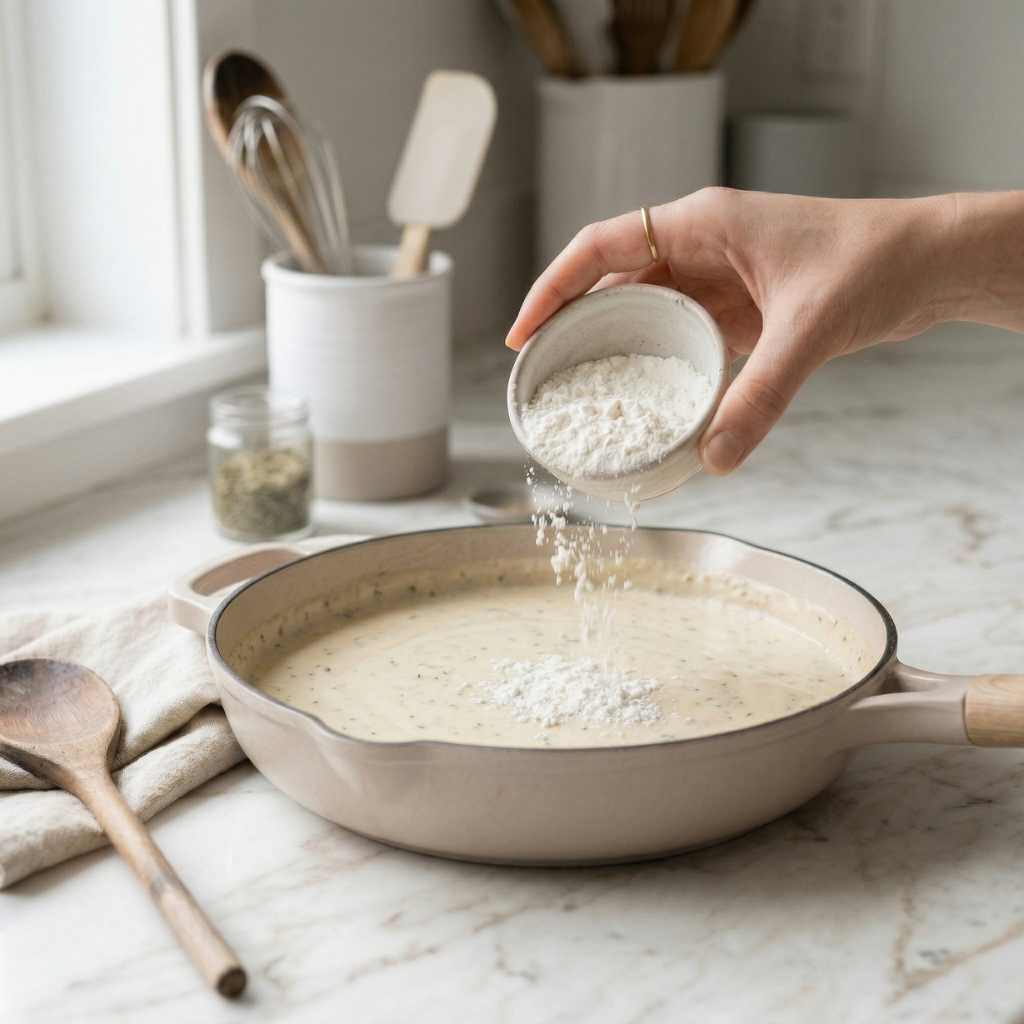
And what about cornstarch and gluten?
Anyone who bakes or thickens sauces has probably come across wheat flour, wheat starch and cornstarch. The terms look similar, but the products behave very differently in the kitchen. In this article we clearly explain the differences, when to use which product, and how it is with gluten.
What is wheat flour?
Wheat flour is made by grinding and sifting wheat kernels. During that process the bran and germ are removed, leaving a fine, light flour. Because wheat flour contains proteins from the wheat kernel — including gluten — it is ideal for baking where structure is needed.
Characteristics of wheat flour:
- Contains gluten (provides structure and elasticity)
- Gives volume and firmness to baked goods
- Used in bread, cake, cookies and pancakes
- Can also lightly thicken sauces, but it is not primarily intended for that
Typical uses: bread dough, pancake batter, cookies, pies and other baked goods where lightness and structure are important.
What is wheat starch?
Wheat starch is the starch portion of the wheat kernel. During production the proteins (including gluten) are removed as much as possible, so that mainly the starch remains.
Important to know:
- Wheat starch is not flour: it lacks the proteins that give structure.
- It thickens, but does not provide volume or elasticity.
- It is mainly used to thicken liquids or to give a soft texture.
Typical uses: sauces, soups, pudding, and in some baked goods to create a softer texture.
Is wheat starch gluten-free?
This is a frequently asked question. Because wheat starch is made from wheat, you might expect that it always contains gluten. That is not necessarily the case.
This is how it is:
- During the production process the proteins (including gluten) are largely removed.
- Still, a small amount of gluten can remain.
- Only when wheat starch has been specifically produced and tested as gluten-free may it be sold as gluten-free.
Important for people with celiac disease or gluten intolerance:
Always check the label. If it does not explicitly say “gluten-free,” do not automatically assume it is safe.
Cornstarch vs. wheat starch: what is the difference?
Cornstarch is the starch from corn. Like wheat starch it is used to thicken, but there are a few important differences.
What is cornstarch?
- Starch from corn
- Naturally gluten-free
- Neutral taste
- Gives a clear, glossy thickening
Difference in use
- Cornstarch gives a clear, glossy thickening — ideal for sauces, soups and desserts.
- Wheat starch gives a slightly softer, creamier mouthfeel and is often used in bakery applications.
Can you substitute them?
In many cases yes. For thickening sauces or soups you can often substitute cornstarch and wheat starch 1:1. The result may differ slightly in texture, but in most recipes it works fine.
When do you use what?
- Wheat flour: when you need structure, lightness and elasticity (e.g. bread or cake).
- Wheat starch: when you want to thicken or create a soft texture without much protein.
- Cornstarch: when you want to thicken gluten-free or want a clear sauce.
Frequently asked questions
1- Is wheat starch the same as flour?
No. Flour contains proteins and provides structure; wheat starch is almost pure starch and is meant for thickening.
2- Can you replace wheat flour with wheat starch?
Not one-to-one. Wheat starch lacks the proteins needed to make dough elastic.
3- Is cornstarch healthier than wheat starch?
Not necessarily. They mainly differ in origin (corn vs. wheat) and properties, not in “health.”
4- Is wheat starch safe on a gluten-free diet?
Only if it is certified gluten-free. Otherwise there may still be residual amounts of gluten.
5- Which binds better: cornstarch or wheat starch?
Both thicken well, but cornstarch gives a slightly firmer and glossier result, while wheat starch feels a bit softer.
Summary
- Wheat flour = structure and volume (contains gluten)
- Wheat starch = thickening and softening (not always gluten-free)
- Cornstarch = gluten-free thickener with clear thickening
By choosing the right product you get the best result from your recipes — whether you bake, thicken or look for a gluten-free option.