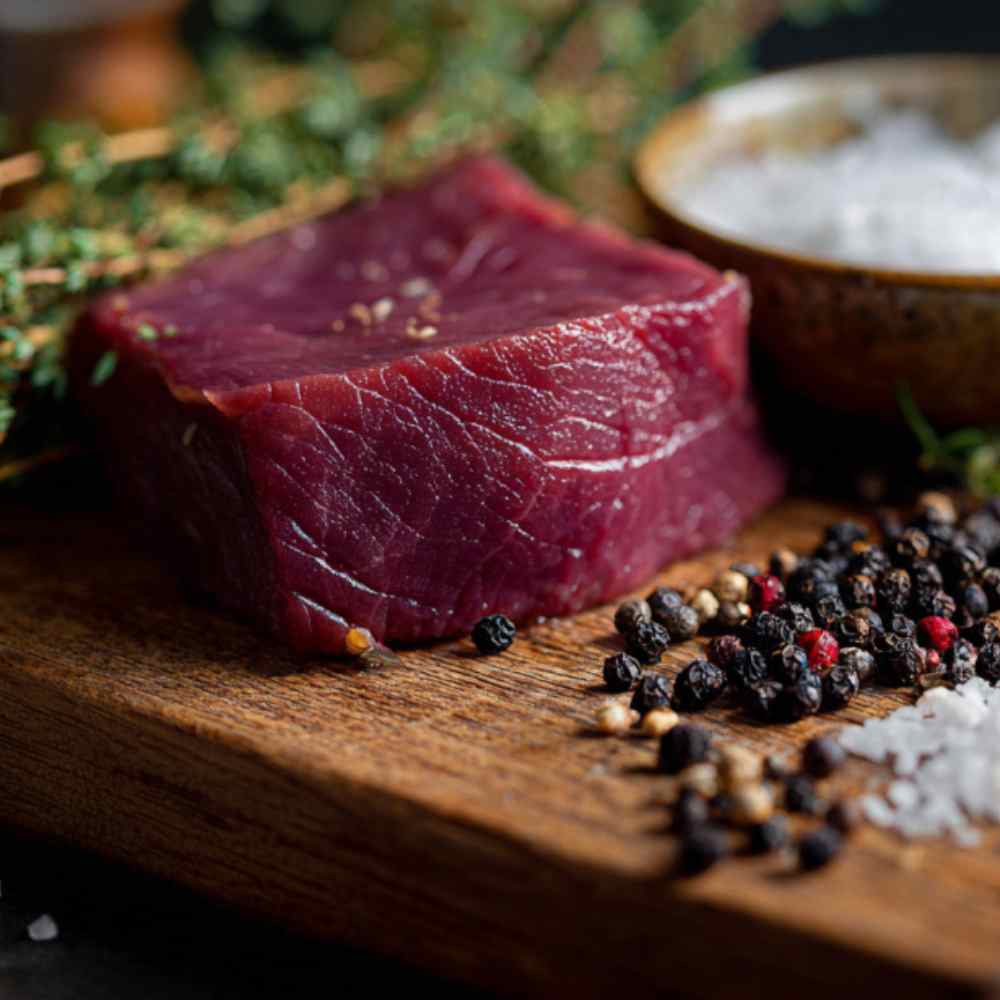
The game season has started and that means you can prepare delicious game dishes. How about a tender piece of venison, special ragouts or steaming stews? From now on you can make that at home, because with our tips and tricks it becomes easier than ever. Time to dive into the game season and equip yourself with culinary tips!
The game season has started
Are you wild about game? We get it. Game meat has a firm texture and is low in fat – wild animals are more active – and the fat contains many unsaturated fatty acids (such as omega-3 fatty acids). The latter may be due to the huge amount of herbs the animals eat. You can taste that these animals lived in the wild! Traditionally the game season – the culinary season – starts on October 15. On this day the hunt opens for hare, pheasant, hare, deer and other game species. Still, in September you can already see rabbit, wild boar and wild duck appearing on the menu – or serve them yourself to your guests.
When is the game season?
The game season is considered one of the most beautiful seasons for culinary Netherlands. Traditionally the season runs from October 15 to early January. There is one exception: the roe deer. The female roe deer is hunted from January 1 to March 15 and the male roe deer between May 1 and September 15. Roe deer is also seen as ‘summer game’.
Calendar of the game season
The hunt must comply with strict rules and therefore game is not available all year round. Curious when you can get game meat? Take a look at this game season calendar:
- January 1 to March 15: female roe deer
- May 15 to September 15: male roe deer
- August 1 to March 15: deer & wild boar
- August 23 to January 31: wild duck
- October 15 to December 31: hare & pheasant
- All year round: wood pigeon & rabbit
Honest meat from the real outdoors. Keep in mind: not all game shot that you find at the butcher comes from the Netherlands. The vast majority of consumed game is imported (mainly from Germany and Poland).
Food for thought: these culinary terms you should know
Do you know all the culinary terms? These words are used by star chefs in the kitchen when it comes to meat and will undoubtedly come in handy:
- Abaisser: rolling out or cutting meat to the desired thickness.
- Arroseren: basting or pouring braising juices over the meat so it doesn't dry out during roasting. Definitely recommended for large pieces of meat.
- Barderen: wrapping and preparing meat with bacon.
- Deglacer: after roasting the meat, loosen the fond with water, wine or stock.
- Farceren: stuffing the meat with additional flavorings, such as minced meat, vegetables and herbs.
- Larderen: inserting and preparing the meat with bacon so it becomes extra tender.
Which vegetables do you serve with game?
Do you have a dinner coming up soon and want to cook a stellar meal? A nice piece of game, your guests will probably say yes to that. But what will you choose? And which vegetables will you serve with it? Because of the powerful flavor, game, naturally lean meat, goes well with seasonal vegetables. These vegetables are tastier, cheaper and less harmful to the environment. Moreover, you get forgotten vegetables more often, such as parsnip.
And which seasonal vegetables go well with game? Put these on the shopping list: endive, beetroot, cabbage (such as cauliflower, kale, turnip, celeriac, sauerkraut, fennel and white cabbage), pak choi, purslane, parsnip, pumpkin, leek, rhubarb, radish, salsify, sprouts, onion, carrot and chicory.
Different types of game
There are different types of game; a distinction is made between fur game (mammals with a coat) and feathered game (birds). Fur game can again be subdivided into large game (such as deer), wild boars and small game (such as hares and wild rabbits). Let's take a closer look:
RABBIT
Rabbit has a rich flavor and is considered a delicacy by many. Wild rabbit is perfect for every lover of tender meat. Tip: serve with potato croquettes, caramelized carrots or turnip, little onions and baked fruits such as pear and apple.
ROE DEER
Roe deer has a refined taste that you can combine well with pure, mild flavors. Serve roe deer with autumn vegetables, braised mushrooms or chestnut purée. Celeriac purée or a tasty chutney also go well with roe deer.
VENISON
Deer has a fine flavor, with a firm texture. With a piece of venison you choose strong flavors, such as black pepper. Venison is delicious with chestnuts, salsify, pointed cabbage and almonds. Venison also pairs well with parsnip, rutabaga, chicory and mushrooms. Also nice: venison stew. Then don't forget the thyme and clove, which together with sage and pepper give a unique taste.
HARE
Hare, a popular piece of game meat, has a strong flavor and is prepared like red meat. Hare is tasty with apple, goat cheese, oregano and winter vegetables such as Brussels sprouts and chicory. Or how about hare pâté with onion chutney and a crispy toast?
DUCK
Wild duck is a favorite for many; the rich flavor – combined with cranberry compote and caramelized carrots – is a popular choice. Or serve it with chicory and fried pear and apple.
PHEASANT
Pheasant belongs to the category of game poultry. It is a real delicacy, often combined with sauerkraut. Our tip: pheasant is tasty with sage, rosemary and Parma ham. Pheasant is also delicious with truffle, sauerkraut, leek, Brussels sprouts and red cabbage.
WILD BOAR
Wild boars have flavorful and juicy meat. Boar is tasty with endive, gnocchi, pickled onions and cranberries. Or make a delicious stew out of it – then don't forget the ground mace. Our tip: try a wild boar steak with red wine sauce with cinnamon!
Game dishes and the right herbs
The unique taste of game goes perfectly with herbs that add even more intensity such as clove, bay leaf, rosemary, thyme and sage. But juniper also deserves a place in your game dishes. By cooking juniper berries in dishes for a long time, the soft, sweet tones are released. That is why they are ideal for use in stews, ragouts and marinades. Juniper berries are particularly excellent with game, because they neutralize its strong flavor.
Frequently asked questions about the game season
1. When is the game season in the Netherlands?
Traditionally the game season runs from October 15 to early January. Some game species have different periods, such as roe deer (both summer and winter game) and wild boar. In addition, wood pigeon and rabbit are available all year round. Always check the current hunting calendar for specific dates.
2. What is the difference between fur game and feathered game?
Fur game consists of mammals with a coat, such as deer, roe deer, hare and wild boar. Feathered game refers to wild birds, such as pheasant and wild duck. The preparation differs: fur game is often served rare or medium-rare, while feathered game is usually cooked through.
3. Which vegetables go well with game?
Game combines excellently with autumn and winter vegetables such as parsnip, celeriac, Brussels sprouts, pumpkin, red cabbage and chicory. Earthy flavors like mushrooms and chestnuts also enhance the character of game dishes.
4. Which herbs do you use with game dishes?
Classic herbs for game are thyme, rosemary, sage, bay leaf and clove. Juniper berries are particularly popular in stews and ragouts because they nicely round off the strong flavor of game. Black pepper and mace are also often used.
5. How do you prepare game tender and juicy?
Game meat is lean and can dry out quickly. Important techniques are:
-
Arroseren (basting with braising juices)
-
Larderen or barderen (adding bacon for extra fat and tenderness)
-
Do not overcook
-
Let the meat rest after cooking
For stews: slow cooking at a low temperature gives the best result.