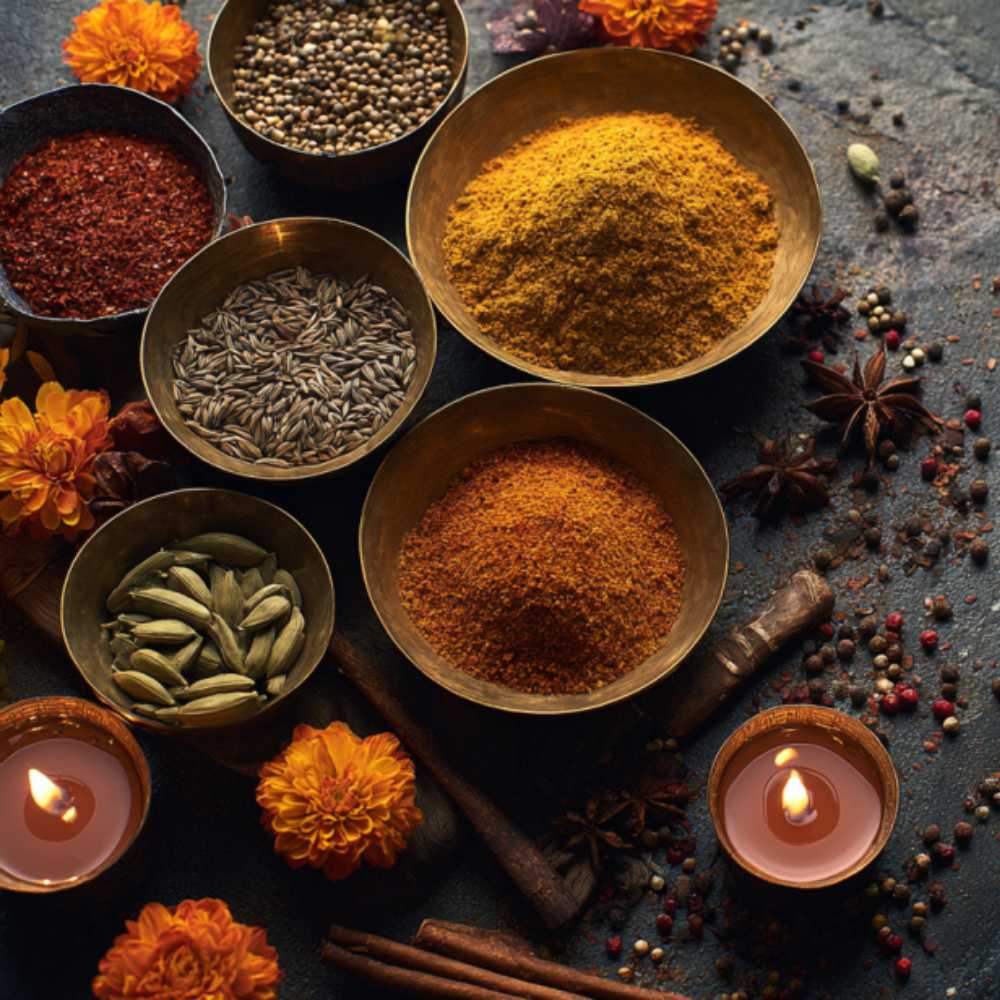
Are you crazy about Indian cuisine but have never prepared anything yourself? Time to change that, because you can very easily make Indian dishes at home! From delicious curries with naan bread to samosas, papadum and dahl; with the right spices you bring all Indian treats to life. In honor of Divali – the famous festival of lights – we dive into Indian cuisine.
The festival of lights Divali
Are you already familiar with Divali? Divali, also known as Diwali or deepavali, is an important festival in Hinduism and originates from India. This five-day festival celebrates the victory of good over evil, where light wins over darkness. During Divali, small lamps called diyas are lit all around the house. Divali literally means ‘row of diyas’ and is therefore also called the Indian festival of lights. With all the lights, Lakshmi - the goddess of light, prosperity and wealth - is honored.
Treats during Divali
Divali is celebrated festively in all scents and colors. During the festival of lights, Indian sweets – called Mithai – should definitely not be missed. How about poories (fried breads), coconut balls, barfi, pistachio laddoo and sweet pumpkin with flaked almonds? These delicious treats are washed down with a cup of hot chai (the Indian word for tea).
Indian cuisine: flavorful and diverse
India is the seventh largest country in the world (our country fits into India no less than 95 times!) and every region has its own dishes and recipes. Although Indian cuisine is very diverse, it is characterized by the use of many spices and herbs. Different types of rice, grains, legumes, paneer (a kind of fresh cheese without rennet) and ghee (clarified butter) are also used a lot. Tandoori, dahl, tikka masala and butter chicken are well-known dishes. Is your stomach already rumbling?
During Divali, mainly vegetarian dishes are prepared. The different religions in India have a great influence on Indian cuisine. Hindus do not eat beef (the cow is considered a sacred animal in Hinduism) and Muslims do not eat pork (this is considered an unclean animal). Many Indians do not eat meat at all, so Indian cuisine consists largely of vegetarian dishes.
From the Indian kitchen: spices
Spices form the cornerstone of Indian cuisine. The delightful aromas, flavors and textures of all dishes arise from correctly blending spices. Good news: with a limited assortment of dried and ground spices you can already make many delicious dishes! If you have the following - commonly used spices in India - in your cupboard, you’ll get pretty far:
Turmeric (Indian turmeric root) is recognizable by its mildly bitter taste and yellow color. So don’t spill. This spice is known as a natural anti-inflammatory.
The spice blend of Indian cuisine: garam masala - which we will go into in more detail below.
- Anise seed
An aromatic herb that gives dishes a warm character. Anise seed is often used for sweets, curries or in the preparation of fish. - Cardamom
Cardamom is related to ginger. It has a sharp, somewhat sweet aroma. The spice is piquant, but has a fresh and at the same time sweetish undertone. - Fennel seed
Fennel seed, in Eastern cuisine often seen as the bridge between sweet and savory, gives dishes a spicy, anise-like flavor. - Cumin seed
The cumin plant belongs to the same family as dill and coriander. Like these herbs, cumin seed has a strong, piquant and at the same time slightly bitter aroma and taste. - Cinnamon
Cinnamon has a soft, warm taste and is wonderful in sweet dishes. The aroma and taste of cinnamon immediately make you think of cozy autumn days.
Garam masala: the spice mix of Indian cuisine
A well-known and widely used spice blend from Indian cuisine is garam masala. This Indian spicy spice mix is used, among other things, in curries and tandoori dishes. Garam masala literally means ‘hot spice mixture’. Not because it is spicy, but mainly because it is a warming mix. Although every region in India has its own spice mix, commonly used spices in garam masala are cardamom, coriander, pepper, cumin, cinnamon, clove and nutmeg. Each and every one of these spices are true flavor makers of Indian cuisine!
Hurry Curry: the secret for quick curries
Are you always so busy, but do you find flavorful, nutritious dishes important? Discover our Hurry Curry! As the name suggests, with this delicious spice mix you can have a tasty curry ready in no time. The Hurry Curry contains, among other things, cumin, coriander, turmeric, lemon and mint. And besides a touch of ginger, you will find NO added sugars in this spice mix.
Or try this handy ‘Bombay Curry’ spice mix sachet: 100% natural, free of added sugars and completely organic. That way you can quickly and easily put a delicious meal for 4 people on the table!
Have you already been inspired? High time to dive into Indian cuisine - enjoy cooking!
Frequently asked questions about Divali and Indian dishes
1. What is Divali and why is it celebrated?
Divali (also written as Diwali or Deepavali) is a five-day Hindu festival of lights that symbolizes the victory of good over evil. During this festival small oil lamps (diyas) are lit to celebrate light, prosperity and happiness. It is one of the most important holidays in India and is celebrated worldwide.
2. What is traditionally eaten during Divali?
During Divali mostly vegetarian dishes and sweets are served. Think of dahl, curries, poories, samosas and various mithai (Indian sweets such as barfi and laddoo). Chai (Indian spiced tea) is also part of the festive tradition.
3. Which spices are indispensable in Indian cuisine?
Important spices include turmeric, cumin seed, coriander, cardamom, cinnamon, fennel seed and garam masala. With this base you can create a wide range of authentic Indian dishes.
4. Is Indian cuisine mainly spicy?
Not necessarily. Although some dishes can be spicy, Indian cuisine is mainly about balance and layering of spices. Garam masala for example is warming and aromatic, but not automatically hot.
5. Can you easily make Indian curry yourself?
Yes. With a good spice mix like garam masala or a complete curry mix you can quickly put a flavorful meal on the table. Combine with vegetables, legumes or chicken, add coconut milk or tomato and serve with rice or naan bread.