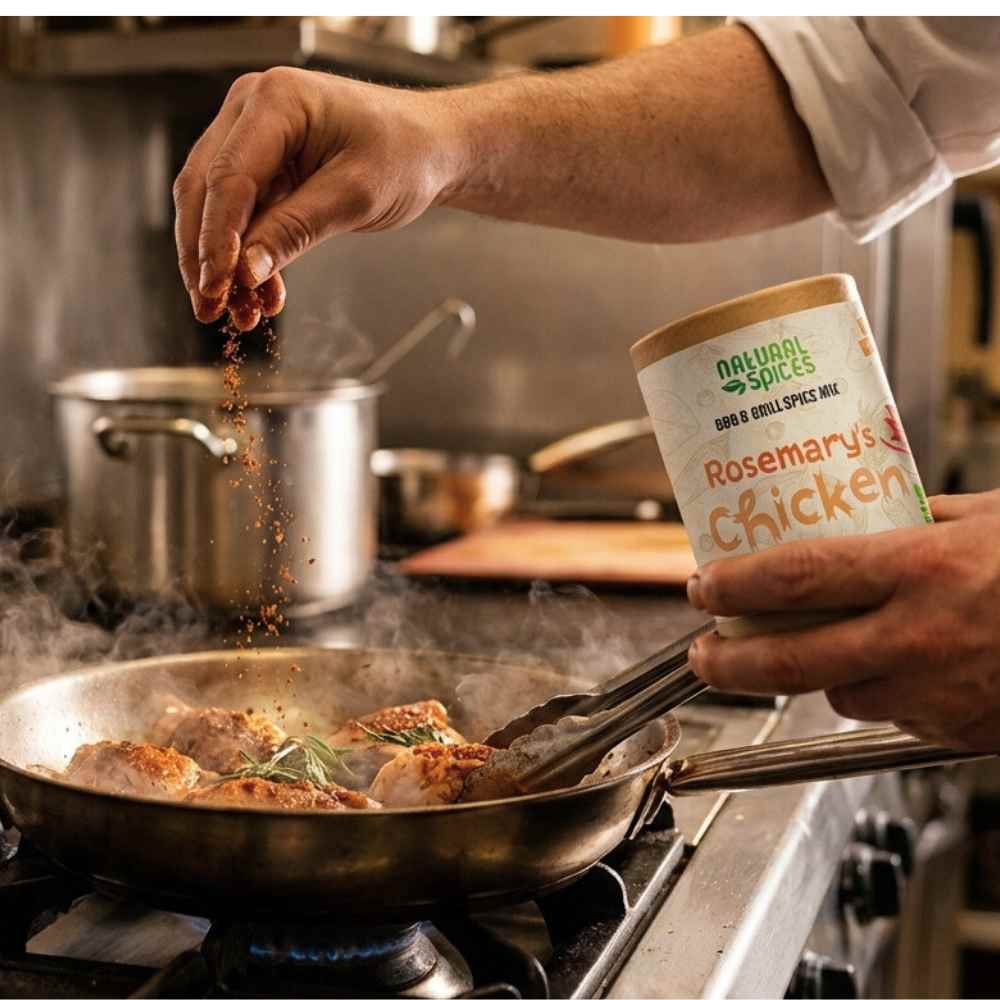
Did you know that it does matter when you add herbs and spices in the preparation process? Because whether you add that one seasoning at the beginning of the process, or at the end, it all influences the taste of your dish. And of course we want that taste to be top-notch to make healthy food as delicious as possible. We can imagine that with the many options you might not know when to add which seasonings best, so we'd like to share our tips with you.
Depending on the dish, the seasoning and the form
First of all, it's good to know that the timing of adding depends on the dish and on which herbs or spices you use. In addition, it also depends on the form in which you use the seasoning; is it whole or ground, fresh or dried? Take for example the spice cinnamon. Are you using cinnamon sticks? Then it's best to add these at the beginning of the preparation process. If on the other hand you're using ground cinnamon? Then you can also add this perfectly at the end.
Dried herbs
With dried herbs you can go two ways. Are you using herbs with delicate leaves, such as parsley, basil, cilantro or mint? These are best added at the end because the flavors of the herbs can quickly evaporate at high temperatures.
If, on the other hand, you are using dry and resinous herbs such as thyme, rosemary or bay leaf? These are usually added at the beginning of the preparation process, because the flavor needs some time to be released.
Fresh herbs
Are you using fresh herbs? Add them as late as possible to preserve the flavor, because if you heat the herbs for too long you will lose the delicious taste. You can also very well use fresh herbs as a finishing touch on your dish. That also makes your dish look beautiful.
Spices
It's best to add spices at the beginning, for example with a little oil or butter. By heating them in the oil or butter, the flavor of the spice is essentially taken over, making it stand out even more in the dish.
These tips are also very important...
As we mentioned before, it can sometimes take a while before the flavor is released. So wait a little before you taste, and then add more if necessary. Furthermore, it is important to have high-quality herbs and spices in your kitchen, because the flavor can deteriorate over time. This also differs per seasoning. To prevent the flavor from dissipating you can also grind whole herbs and spices yourself in a mortar or food processor.
In the above blog we have written a few general tips. Are you still unsure about the perfect moment to add your favorite seasoning and how best to use it? Then you can always send us a message and we will help you further.
5 FAQ – When do you add herbs and spices?
1. Do you add herbs at the beginning or at the end of cooking?
That depends on the type of herb or spice. Hard, woody herbs such as thyme, rosemary and bay leaf are usually added at the beginning so the flavors can slowly release. Finer, more delicate herbs such as parsley, basil or cilantro are added at the end to preserve their fresh aroma.
2. What is the difference between whole and ground spices?
Whole spices, such as cinnamon sticks or cardamom pods, need more time to release flavor and are therefore added earlier in the process. Ground spices release flavor more quickly and can also be added later. Note: ground spices burn more easily at high temperatures.
3. Why do you fry spices first in oil or butter?
By briefly heating spices in oil or butter (also called “blooming”), the aromatic oils dissolve better in the fat. This makes the flavor more intense and more evenly distributed through the dish. This works especially well with spices like cumin, coriander seed, turmeric and paprika powder.
4. When do you add fresh herbs?
You should add fresh herbs as late as possible. Prolonged heating causes aromas to dissipate and the color to dull. Many fresh herbs are perfect as a finishing touch: they give freshness and a nice presentation.
5. How do you prevent herbs from losing their flavor?
Store herbs and spices airtight, in a dark, dry place. Preferably buy smaller quantities of good quality. Whole spices remain potent longer than ground varieties. By grinding them yourself in a mortar you retain maximum flavor and aroma.